Superconductors are defined by a singular, transformative property: the ability to transmit electricity with zero resistance. In a modern electronics landscape where heat loss is the primary tax on efficiency, these materials allow for a near-perfect energy flow. While the technology is most famous for the Meissner Effect — the expulsion of magnetic fields that allows objects to levitate in mid-air — its most profound implications lie in the silent, frictionless movement of subatomic particles. And nowhere is that implication more consequential than in the architecture of quantum computing.
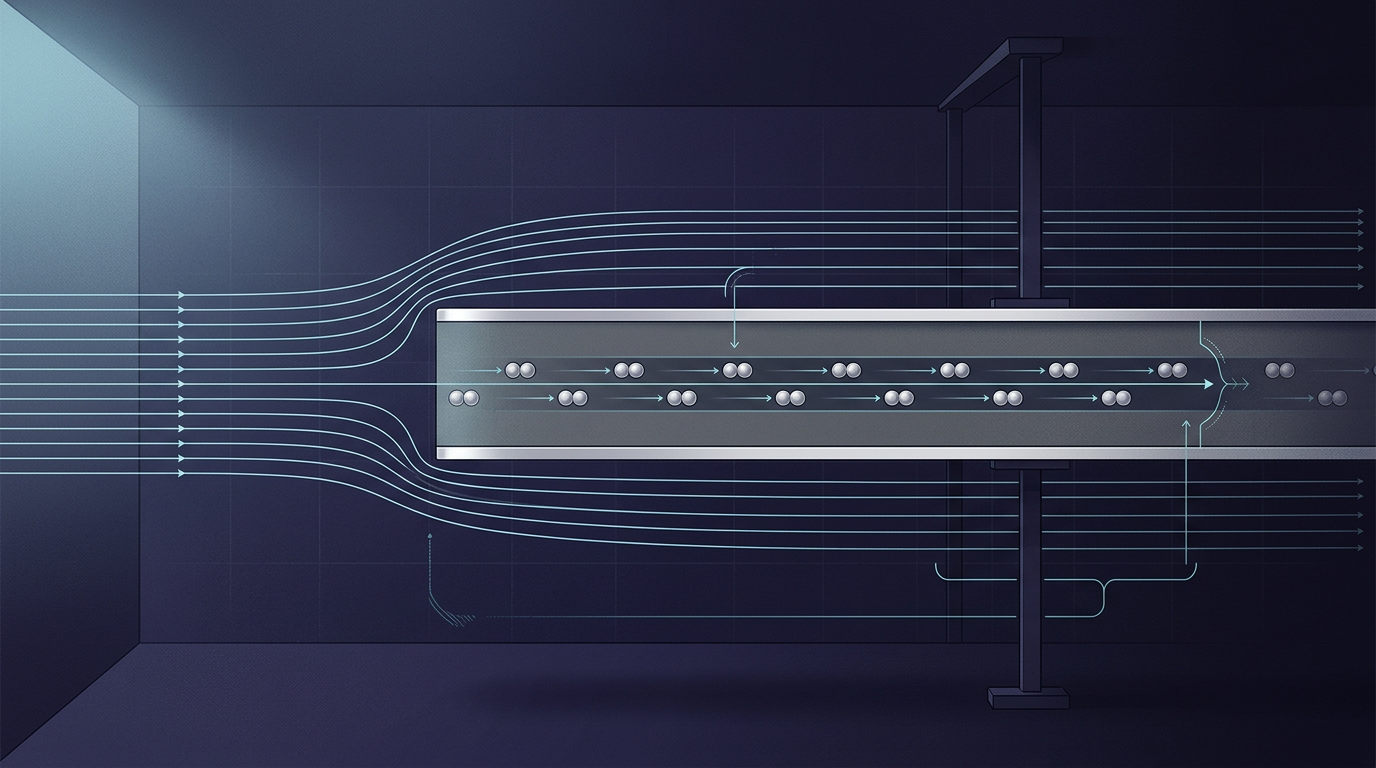
At the quantum level, this behavior occurs when electrons overcome their natural repulsion to form what are known as "Cooper pairs," a phenomenon first described theoretically in the late 1950s by John Bardeen, Leon Cooper, and John Robert Schrieffer. These pairs glide through a material's atomic lattice without the kinetic collisions that typically generate heat in standard conductors like copper or silicon. The absence of thermal noise is not merely an efficiency gain; it is a prerequisite for the extreme stability required by sensitive quantum systems, which are easily disrupted by the slightest external interference.
Why Quantum Hardware Demands Zero Resistance
Classical computing tolerates a remarkable amount of physical imperfection. Transistors switch billions of times per second, generating heat that is managed through fans, heat sinks, and increasingly elaborate cooling systems. The information encoded in binary bits — ones and zeros — is robust enough to survive these thermal fluctuations. Qubits operate under no such forgiveness.
Unlike traditional binary bits, qubits exploit the quantum mechanical phenomena of superposition and entanglement to exist in multiple states simultaneously. This is what gives quantum computers their theoretical advantage: the capacity to explore vast solution spaces in parallel rather than sequentially. But superposition is extraordinarily fragile. Even minor thermal vibrations at the atomic scale can cause a qubit to lose coherence — a process known as decoherence — collapsing its quantum state into an ordinary classical value and destroying the computation in progress.
Superconducting circuits address this vulnerability at its root. By eliminating electrical resistance entirely, they remove the primary source of internal heat generation. Operated at temperatures near absolute zero — typically maintained by dilution refrigerators — superconducting qubits can sustain coherence long enough for meaningful calculations. This is the reason that leading approaches to quantum processor design, including those pursued by major technology firms and research laboratories, rely on superconducting transmon qubits as their fundamental building blocks.
The Engineering Bottleneck Ahead
The physics of superconductivity is well established. The engineering challenge is not. Current superconducting materials require cooling to temperatures in the millikelvin range, demanding infrastructure that is expensive, energy-intensive, and difficult to scale. Each additional qubit introduced into a processor increases the complexity of maintaining uniform thermal isolation across the entire system. Wiring, control electronics, and error-correction overhead all compound the problem.
There is also the question of materials science. The superconductors used in quantum circuits today are conventional low-temperature superconductors, primarily aluminum and niobium. The long-sought goal of room-temperature superconductivity — a material that exhibits zero resistance under ambient conditions — remains elusive despite periodic claims of breakthroughs. Were such a material to be reliably demonstrated and manufactured, it would reshape not only quantum computing but energy transmission, medical imaging, and transportation infrastructure.
For now, the field operates within known constraints. Progress is measured in incremental gains: longer coherence times, lower error rates, more stable fabrication processes. The superconductor is not a silver bullet for quantum computing; it is the necessary foundation upon which every other advance depends.
What remains unresolved is whether superconducting architectures will ultimately prove scalable enough to deliver on the promise of quantum advantage in practical applications, or whether alternative approaches — trapped ions, topological qubits, photonic systems — will close the gap. The answer may depend less on which physical substrate is theoretically superior and more on which engineering ecosystem matures first.
With reporting from Tecnoblog.
Source · Tecnoblog