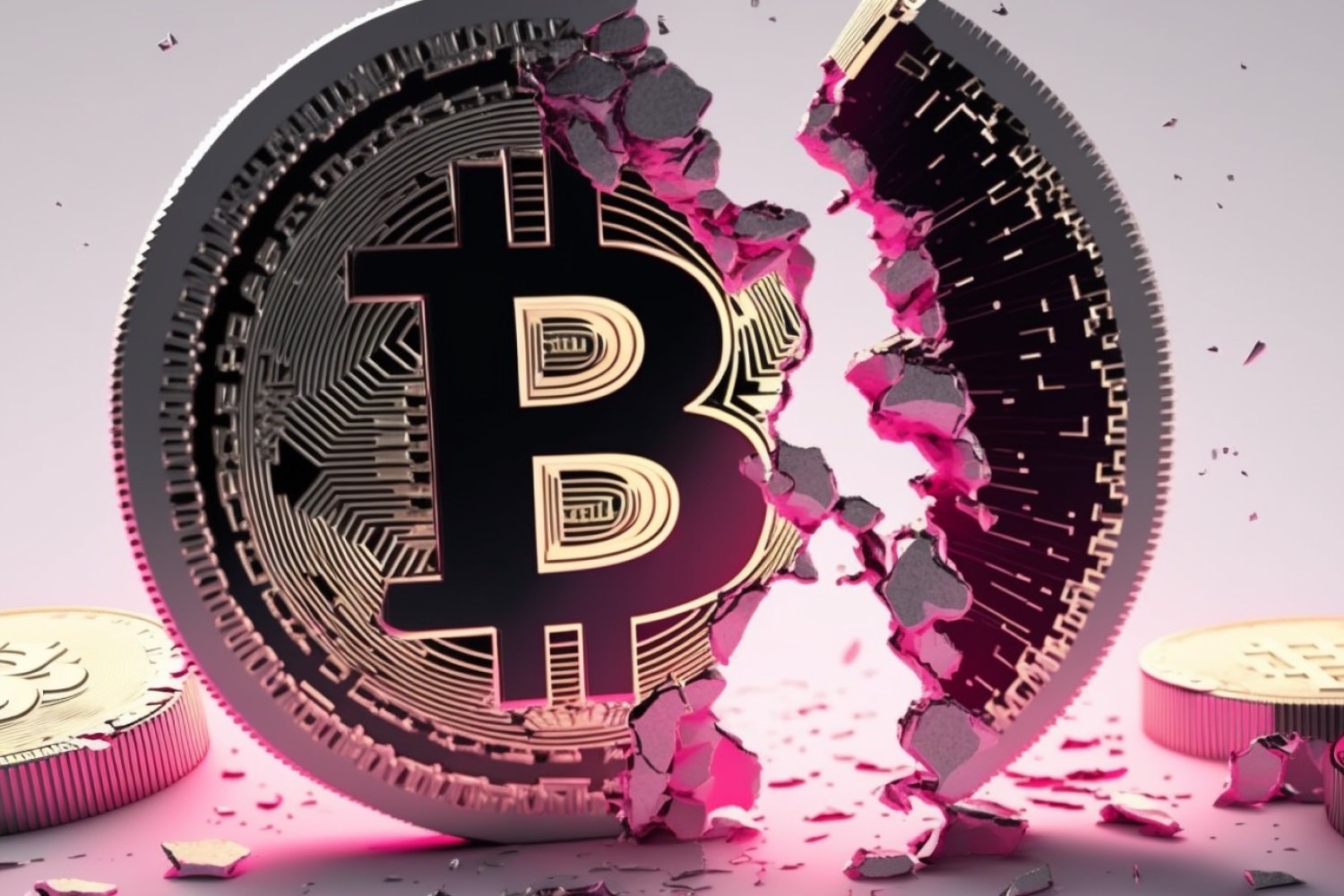
Bitcoin's path back to its all-time high may be blocked not by macroeconomic headwinds or regulatory crackdowns, but by an existential technological hurdle. Nic Carter, a prominent researcher and co-founder of Castle Island Ventures, recently argued that the market's long-term confidence in Bitcoin is increasingly tied to its resilience against quantum computing — a field that threatens the very cryptographic foundations on which the blockchain rests. The claim reframes the usual debate around Bitcoin's price trajectory: instead of focusing on demand cycles and monetary policy, Carter points to a supply-side vulnerability embedded in the protocol itself.
The concern centers on the potential for future quantum computers to break the Elliptic Curve Digital Signature Algorithm (ECDSA) that secures Bitcoin addresses. ECDSA relies on the computational difficulty of deriving a private key from a public key — a task that would take classical computers an impractical amount of time but that a sufficiently powerful quantum machine, running Shor's algorithm, could theoretically accomplish in hours. While no such machine exists at the required scale today, the theoretical "Q-Day" — the moment quantum hardware becomes capable of breaking widely used encryption — looms over the digital asset space with growing weight.
The institutional calculus
Carter's assertion carries a specific financial implication: that institutional investors may eventually grow unwilling to allocate capital to a multi-trillion-dollar asset class that lacks a definitive, post-quantum migration path. This is not a fringe concern. Large allocators — pension funds, sovereign wealth vehicles, corporate treasuries — operate on time horizons of decades. An asset whose security model could be rendered obsolete within that window presents a category of risk that traditional portfolio theory struggles to price.
The dynamic creates a peculiar ceiling effect. Bitcoin may continue to attract speculative flows and retail enthusiasm, but the deeper pools of institutional capital that would be necessary to push the asset decisively past prior peaks could remain on the sidelines. The longer the Bitcoin developer community delays a credible quantum-resistance roadmap, the more this uncertainty compounds. It is worth noting that other cryptographic systems face the same underlying threat — TLS, the protocol securing most internet traffic, also depends on algorithms vulnerable to quantum attack. But Bitcoin's case is distinct: its ledger is immutable and public. Coins sitting in addresses with exposed public keys cannot be moved to safer formats without the cooperation of their holders, some of whom may have lost access to their wallets entirely. The so-called "Satoshi coins" — the earliest mined bitcoins, widely believed to be held in addresses with exposed public keys — represent a particularly visible symbol of this risk.
The governance bottleneck
Upgrading Bitcoin is notoriously difficult by design. The network's consensus mechanism requires broad agreement across a global, decentralized community of miners, node operators, and developers. Previous protocol changes — the SegWit upgrade in 2017, the Taproot activation in 2021 — each took years of debate, testing, and political negotiation within the community. A post-quantum migration would be orders of magnitude more complex, potentially requiring changes to address formats, signature schemes, and transaction validation logic simultaneously.
Several post-quantum cryptographic standards have already been formalized outside the Bitcoin ecosystem. The U.S. National Institute of Standards and Technology (NIST) has been advancing lattice-based and hash-based signature schemes as replacements for vulnerable algorithms. The technical building blocks, in other words, exist. The bottleneck is governance, not science. Bitcoin's decentralized structure — its greatest feature as a censorship-resistant monetary network — becomes its greatest liability when rapid, coordinated protocol evolution is required.
As quantum research accelerates across government labs and private enterprises, the debate over quantum-resistant upgrades is migrating from the fringes of applied cryptography to the center of financial risk assessment. Carter's framing sharpens the stakes: Bitcoin's claim to be a permanent store of value is, at its core, a claim about the durability of its cryptographic assumptions. If those assumptions carry an expiration date — even a distant and uncertain one — the market will eventually demand a plan. Whether Bitcoin's governance model can produce that plan before confidence erodes is the tension that now sits beneath the price chart.
With reporting from Exame Inovação.
Source · Exame Inovação