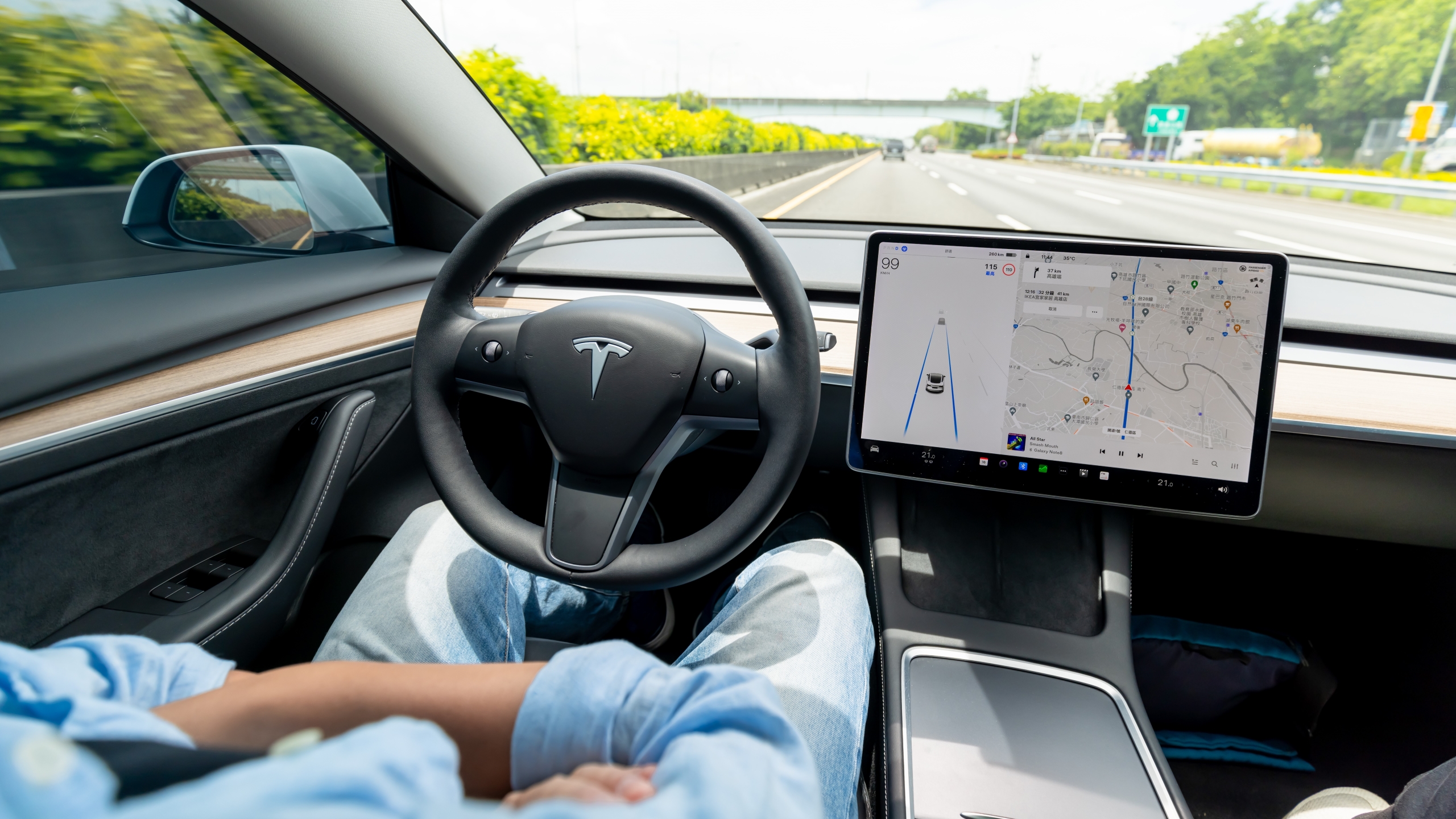
Tesla has long treated its vehicles more like software platforms than traditional hardware, and its latest update to the Full Self-Driving (FSD) interface reinforces this ethos. A new dedicated app not only streamlines the subscription process for the controversial driver-assistance suite but also introduces a "streaks" feature — a mechanic borrowed directly from consumer apps like Duolingo and Snapchat. By tracking how many consecutive days or trips a driver engages the system, Tesla is applying the behavioral incentives of social media and language-learning platforms to the act of operating a vehicle.
The move arrives at a moment when Tesla's FSD remains classified as a Level 2 driver-assistance system, meaning the human behind the wheel is legally and functionally responsible at all times. That distinction matters: the feature being gamified is not autonomous driving in the regulatory sense, but rather the act of activating and relying on software that still requires continuous supervision.
Behavioral design meets fleet data
The streak mechanic is a well-documented tool in behavioral design. Variable reinforcement schedules, loss aversion around breaking a streak, and visible progress indicators have proven effective at driving daily active usage across consumer software. Duolingo's streak counter is perhaps the most cited example — the company has credited the feature with meaningfully improving retention metrics. Tesla is now transplanting that same logic into a domain with materially different stakes: multi-ton vehicles moving at highway speed.
Beyond mere engagement, the streaks serve a structural purpose for the company. FSD improves through exposure to real-world driving scenarios, and Tesla's approach to autonomy depends on massive volumes of visual data collected by customer vehicles to train its neural networks. Every mile driven with FSD active is, in effect, a training run. By gamifying the experience, Tesla is incentivizing its customer base to function as a distributed fleet of beta testers, turning routine commutes into data-harvesting sessions. The arrangement is unusual in industrial terms: the customer pays for the software subscription, uses the product, and simultaneously generates the raw material the company needs to improve it. The value flows in both directions, but the economics tilt toward the platform operator.
This dynamic raises questions that regulators have yet to fully address. If a driver activates FSD on a given day primarily to maintain a streak rather than because conditions are suitable for the system's capabilities, the incentive structure may be working against the safety logic that underpins Level 2 classification. The National Highway Traffic Safety Administration (NHTSA) has opened multiple investigations into FSD-related incidents over the years, and the introduction of engagement mechanics adds a new variable to an already complex oversight picture.
The vehicle as platform
Tesla's approach is part of a broader shift in which vehicles function less as finished products and more as continuously updated platforms generating persistent data streams. Alphabet's Waymo, for instance, has begun a secondary mission of alerting city municipalities to potholes detected by its sensors during routine trips. As vehicles become increasingly sensor-rich and software-defined, the primary task of getting from point A to point B is being augmented by secondary layers of data collection and digital feedback loops.
The pattern echoes what happened in smartphones over the past decade. Once devices became powerful enough to support persistent software ecosystems, the hardware became a vessel for services — and the services became the real business. Tesla's FSD subscription model, now enhanced with retention-focused design, follows a similar trajectory. The car is the platform; the recurring software revenue is the margin; and the driving data is the strategic asset.
What remains unresolved is whether the frameworks governing vehicle safety can adapt to products that behave like apps. Traditional automotive regulation assumes a relatively static product at the point of sale. Software-defined vehicles challenge that assumption on every axis — from liability allocation to the appropriateness of engagement mechanics that encourage system activation. The tension between consumer tech culture and transportation safety regulation is not new, but the streaks feature sharpens it. Whether the incentive to keep a streak alive ever conflicts with the judgment to disengage the system is not a hypothetical — it is a design question with real-world consequences that neither Tesla nor regulators have publicly addressed.
With reporting from The Drive.
Source · The Drive