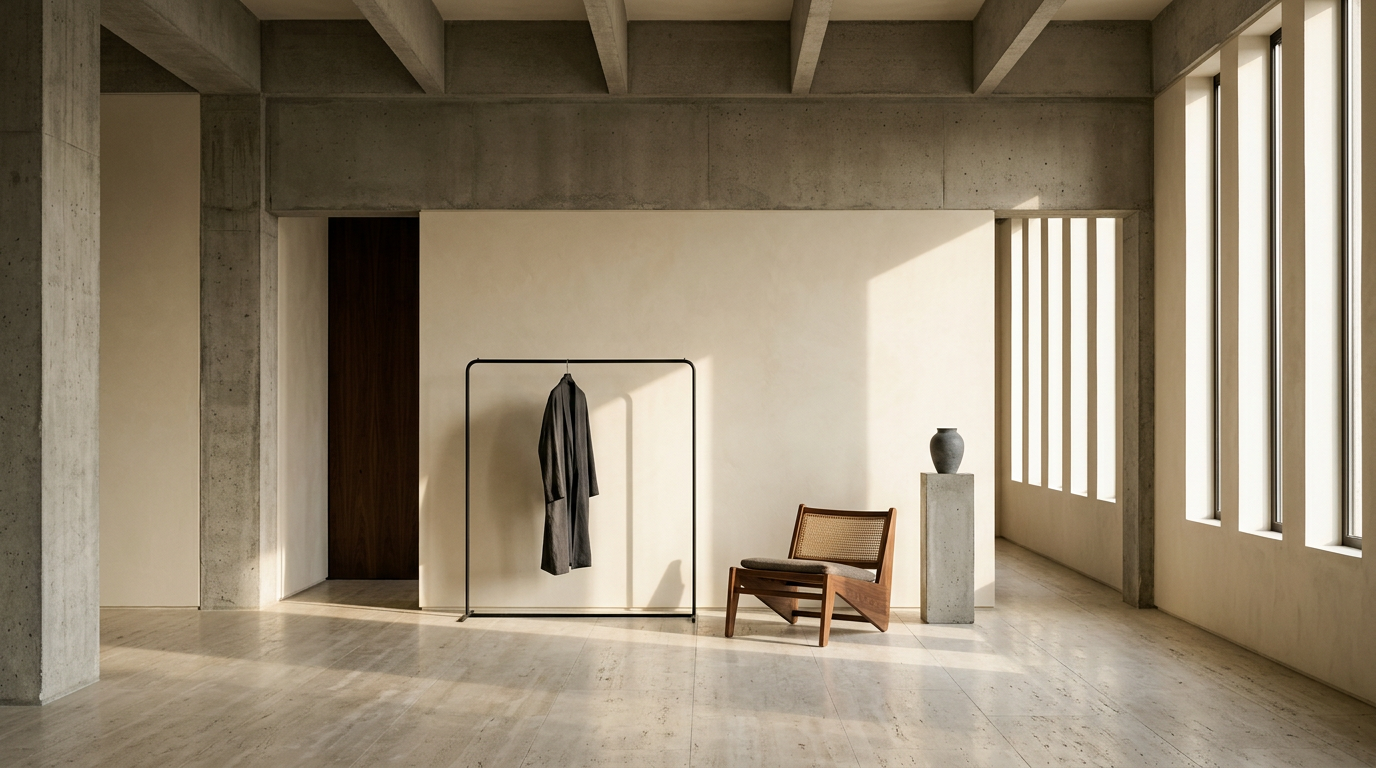
Milan Design Week, the annual convergence of architects, designers, manufacturers, and cultural observers, once again commands global attention. The event, which sprawls across the city's fairgrounds and its historic Brera and Tortona districts, has long functioned as more than a commercial showcase. It is a forum where the design industry takes stock of its own direction — where material innovation, spatial thinking, and cultural aspiration collide in real time. This year's edition arrives amid an industry reckoning with sustainability imperatives, the economics of luxury, and the question of what design owes to public life.
At the same time, a proposal for an "Arc de Trump" has surfaced in architectural discourse, drawing immediate and uncomfortable comparison to the Arc de Triomphe in Paris. The concept — a monumental arch conceived not to honor collective national memory but to project the personal brand of a single political figure — has provoked sharp debate about the function of monuments in democratic societies and the line between civic architecture and spectacle.
Milan as Barometer
Milan Design Week has occupied its position at the center of the global design calendar for decades, evolving from a furniture trade fair into a sprawling cultural event that touches fashion, technology, art, and urban planning. The Salone del Mobile, its commercial backbone, draws exhibitors and visitors from dozens of countries. But the satellite exhibitions scattered across Milan's neighborhoods — collectively known as Fuorisalone — often generate the more provocative conversations, staging installations and prototypes that test the boundaries of what design can be.
The event's gravitational pull is not accidental. Milan sits at the intersection of Italian manufacturing tradition and European creative culture, a city where artisanal craft and industrial production have coexisted for generations. That heritage gives the week a particular authority: what gains traction in Milan tends to ripple outward through global supply chains, retail strategies, and architectural commissions. When the conversation in Milan shifts — toward bio-based materials, toward post-growth economics, toward spatial equity — the broader industry tends to follow, if unevenly.
This year, the tension between luxury aspiration and ecological responsibility remains unresolved. The design industry has made visible commitments to sustainability in recent cycles, but the economic model underlying much of high-end design still rewards novelty, material excess, and planned obsolescence. Milan, for all its sophistication, reflects that contradiction rather than resolving it.
The Monument as Mirror
The "Arc de Trump" proposal operates in a different register entirely. Monuments have always served political purposes — the Arc de Triomphe was commissioned by Napoleon to celebrate military victory, and its meaning has been contested and renegotiated across two centuries of French history. The Washington Monument, the Lincoln Memorial, and Mount Rushmore each encode specific narratives about American identity, power, and memory. What distinguishes the proposed arch is its apparent departure from the commemorative tradition altogether. Rather than marking a shared historical event or honoring a principle, the concept appears oriented toward personal glorification — architecture as brand extension.
This is not without precedent. Throughout history, rulers and magnates have commissioned structures designed primarily to project individual power: triumphal columns, palatial estates, corporate towers bearing their builders' names. What has changed is the context. In an era of intense debate over public space — who it belongs to, what values it should embody, how it should be funded — a monument conceived around a living political figure raises questions that are as much about governance and civic norms as about aesthetics.
The juxtaposition with Milan is instructive. Design Week, at its best, represents a collective and iterative process: thousands of practitioners refining ideas through dialogue, experimentation, and critique. The monumental arch, by contrast, represents a singular declarative act — one voice, amplified through scale. Both impulses exist within architecture, and neither is new. But the distance between them may be widening. Whether the built environment of the coming decades will be shaped more by collaborative design intelligence or by the monumental ambitions of individual patrons remains an open and unresolved question — one that the design community gathered in Milan is, whether consciously or not, helping to answer.
With reporting from Dezeen Architecture.
Source · Dezeen Architecture