In 1972, the Nike Moon Shoe was a radical experiment in traction, born from co-founder Bill Bowerman's decision to pour rubber into his wife's waffle iron. The resulting tread, designed for the Olympic Trials in Eugene, Oregon, left distinct impressions in the dirt that resembled the footprints left by astronauts on the lunar surface just three years prior. More than fifty years later, this relic of early athletic industrialism is transitioning from a collector's trophy into a staple of contemporary fashion. Nike is preparing a series of general-release colorways that bring the silhouette back to retail shelves at accessible price points, a move that says as much about the current state of sneaker culture as it does about the shoe itself.
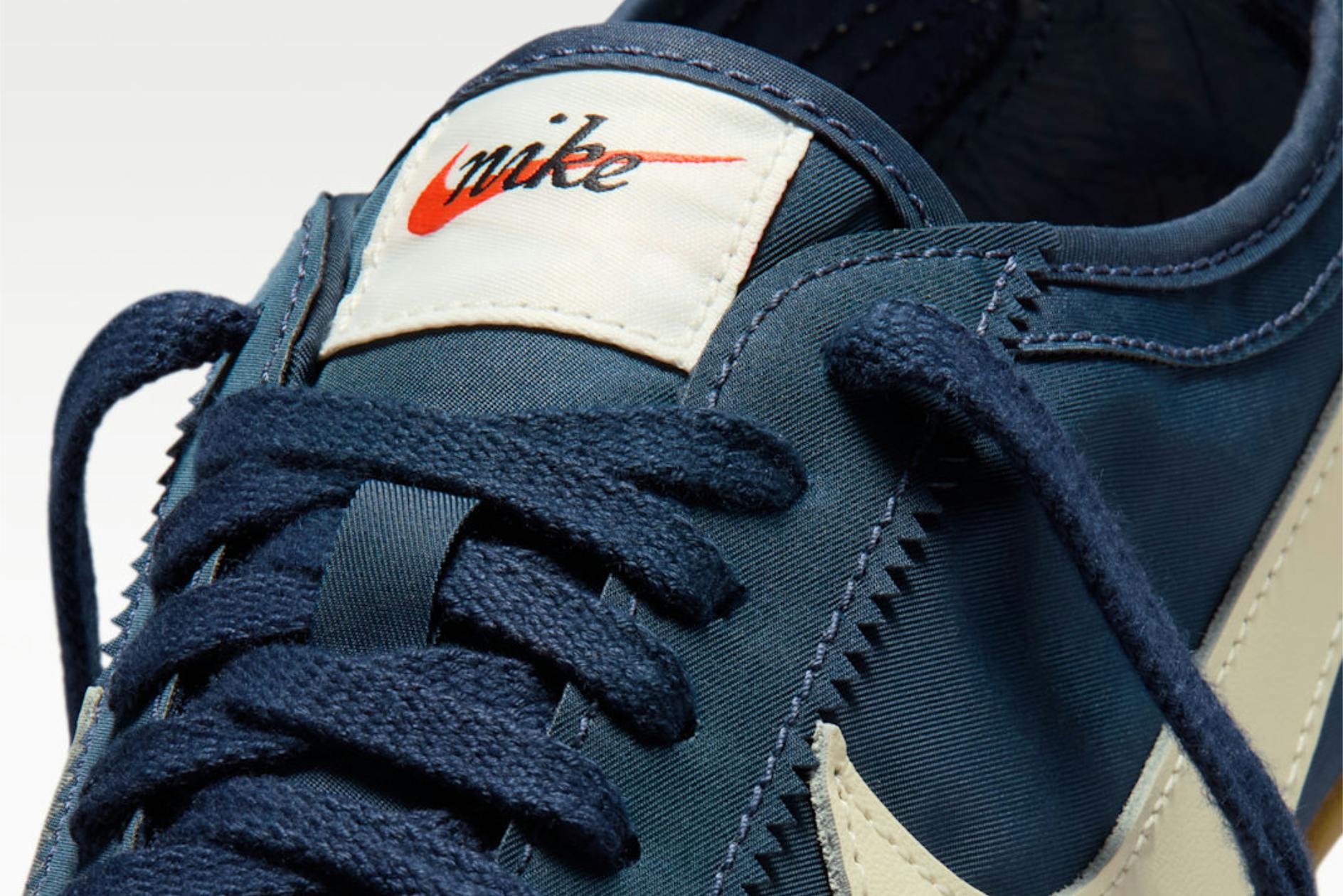
The Moon Shoe's return to the general market follows a high-profile collaboration with Jacquemus, which signaled the industry's renewed interest in slim, low-profile track shoes. Nike is now leaning into the model's mid-century aesthetic with standard releases aimed at a broad consumer base. A forthcoming "Midnight Navy" iteration utilizes the original material palette of smooth nylon and suede, anchored by an oversized cream-white Swoosh that dominates the sidewall — a nod to the era's bold, utilitarian branding. Additional colorways in white and a muted yellow are expected alongside it.
From Auction Relic to Retail Product
The Moon Shoe occupies an unusual position in sneaker history. For decades it existed primarily as an artifact. Original pairs from the 1972 Olympic Trials run are among the rarest sneakers ever produced; one pair famously sold at auction for a record sum that cemented the shoe's status as a cultural object rather than a functional one. That trajectory — from performance prototype to museum piece to auction headline — is common enough in sneaker lore, but the reverse journey, from collectible back to general retail, is far less typical.
Nike's decision to reintroduce the Moon Shoe as a widely available product reflects a broader shift in how heritage footwear is being commercialized. The dominant playbook of the past decade relied on artificial scarcity: limited drops, raffle systems, and resale markets that inflated prices well beyond retail. That model drove hype but also generated fatigue among consumers who grew tired of competing for access. Several major brands have since recalibrated, opting for wider distribution of archival silhouettes rather than tightly controlled releases. The Moon Shoe's return at a retail price between $110 and $120 fits squarely within this recalibration.
The Jacquemus collaboration served as an effective market test. Pairing a minimalist French fashion house with a stripped-down running shoe from the early 1970s demonstrated that the silhouette could hold its own in a fashion context, not merely as a nostalgia play but as a design object with contemporary relevance. The slim profile and low stance of the Moon Shoe align with a visible trend away from the chunky, maximalist sneakers that dominated streetwear for much of the late 2010s. Brands across the industry have been reviving lean, retro-inflected runners — a category where the Moon Shoe, with its genuine provenance, holds a natural advantage over newer designs engineered to look vintage.
The Waffle Sole as Brand Mythology
While the Moon Shoe's performance days are long behind it, its appeal lies in the enduring logic of its construction. The waffle outsole remains the centerpiece, a reminder of a time when footwear innovation was a matter of kitchen-table trial and error rather than computational design and advanced polymer science. That origin story — Bowerman, the waffle iron, the garage-scale experimentation — is foundational to Nike's corporate mythology, and every reissue of the Moon Shoe functions partly as a retelling of it.
This is not incidental. In a market where brand narrative increasingly drives purchasing decisions, a shoe with an authentic, well-documented creation story carries weight that purely aesthetic revivals cannot replicate. The Moon Shoe does not need to be contextualized or explained through a marketing campaign; its history is self-evident in its design.
The new colorways are set to arrive on May 7. Whether the Moon Shoe can sustain commercial momentum beyond an initial wave of interest will depend on how Nike manages the tension between accessibility and desirability — the same tension that has defined sneaker retail strategy for years. A shoe that once existed in single-digit quantities is about to be available to anyone willing to pay retail. Whether ubiquity enhances or diminishes the silhouette's appeal remains the open question.
With reporting from Highsnobiety.
Source · Highsnobiety