Modern truck marketing leans heavily on the imagery of labor — hauling, towing, grit. Advertisements feature pickups silhouetted against construction sites and mountain passes, their chrome hitches gleaming under studio lights. Yet for many owners, the actual experience of hitching a trailer reveals a persistent disconnect between rugged branding and the reality of the hardware. Safety chain hooks too thick for standard hardware, awkwardly placed electrical connectors, receiver assemblies buried behind decorative bumper panels — the industrial design of the modern pickup often prioritizes aesthetic presence over basic utility.
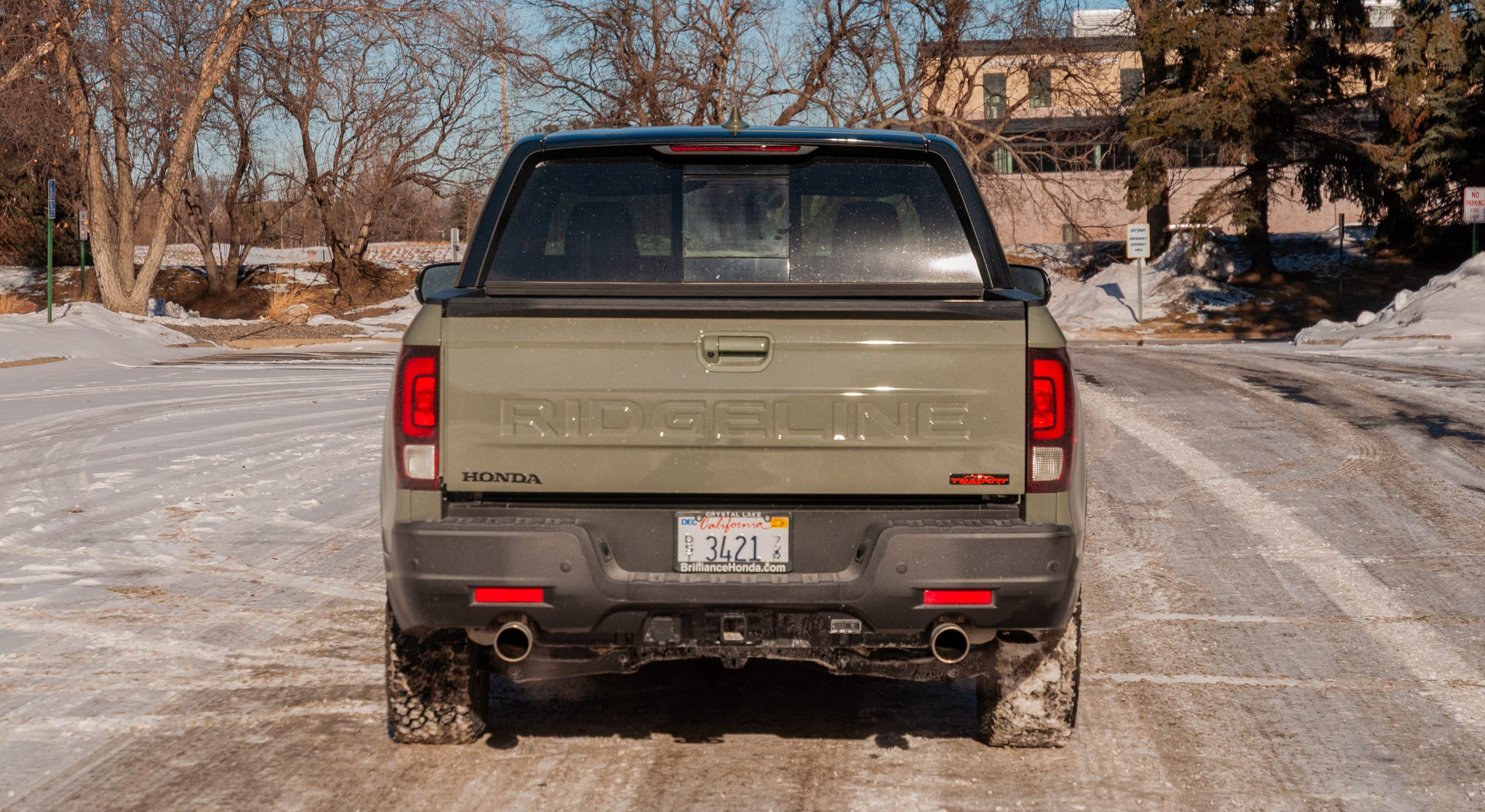
The Honda Ridgeline, frequently dismissed by traditionalists as a "lifestyle" vehicle rather than a true workhorse, has quietly solved several of these fundamental frustrations. While full-sized competitors have experimented with complex hitch setups that can hinder more than help, the Ridgeline employs a straightforward single-wall receiver augmented by large, accessible safety-chain hookups. The design is notably compatible with a wide range of emergency brake hooks and chain styles, avoiding the over-engineered thickness that plagues its larger rivals.
Function Over Form in a Market That Rewards the Opposite
The North American pickup truck segment has spent the better part of two decades in an arms race of scale and spectacle. Grilles have grown taller. Bed heights have risen. Tailgates have acquired built-in steps, integrated workbenches, and even small television screens. Each generation of the Ford F-150, Ram 1500, and Chevrolet Silverado introduces features designed to signal capability — often at the expense of the mundane tasks that define actual truck ownership.
Towing is among the most revealing of those tasks. The act of backing up to a trailer, dropping a ball into a coupler, threading safety chains through hooks, and plugging in a wiring harness is repetitive, physical, and unforgiving of poor ergonomics. When a safety chain hook is too thick to accept a standard clip, or when an electrical connector sits behind a license plate that must be held aside with one hand, the design has failed at its most elementary purpose. These are not edge cases. They are the core use scenario.
The Ridgeline's approach is almost conspicuously simple. Its single-wall receiver sits in plain view, unobstructed by layered bumper architecture. The safety-chain hookup points are sized to accommodate a broad range of standard hardware without requiring adapters or excessive force. The seven-pin light connector is mounted directly adjacent to the receiver rather than up near the license plate. This placement asks the user to bend lower, but it reduces tension on the trailer cord and keeps the electrical connection more secure — a trade-off that favors reliability over convenience of access.
None of this is technologically novel. That is precisely the point.
The Ridgeline's Broader Design Lesson
Honda's unibody pickup has occupied an unusual position since its introduction in 2006. Built on a platform shared with the Pilot SUV rather than on a traditional body-on-frame chassis, it has never competed directly on payload or maximum tow rating with the segment leaders. What it has done, consistently, is treat the truck bed and hitch area as problems of industrial design rather than brand theater.
The pattern is not unique to Honda. In adjacent industries — commercial equipment, agricultural machinery, fleet vehicles — design tends to converge on simplicity and accessibility precisely because the end user interacts with the hardware daily and has little patience for flourish. Consumer trucks, by contrast, exist in a market where the majority of buyers select their vehicle at least partly on appearance and perceived toughness. The incentive structure rewards visual complexity even when it introduces friction into routine tasks.
This tension — between what sells on a showroom floor and what works in a gravel driveway at dusk — is unlikely to resolve cleanly. Full-sized truck manufacturers are not unaware of the ergonomic shortcomings in their hitch designs; they operate under constraints of crash structure, bumper regulation, and the relentless demand for a commanding visual stance. The Ridgeline sidesteps many of those constraints by virtue of its smaller footprint and different structural philosophy, which makes direct comparison imperfect.
What the Ridgeline does demonstrate, however, is that the gap between branding and usability in the truck market remains wide enough for a vehicle dismissed as insufficiently serious to outperform its rivals at one of the most fundamental truck tasks. Whether the broader market rewards that kind of pragmatism — or continues to prefer the theater — says as much about buyers as it does about the machines themselves.
With reporting from The Drive.
Source · The Drive