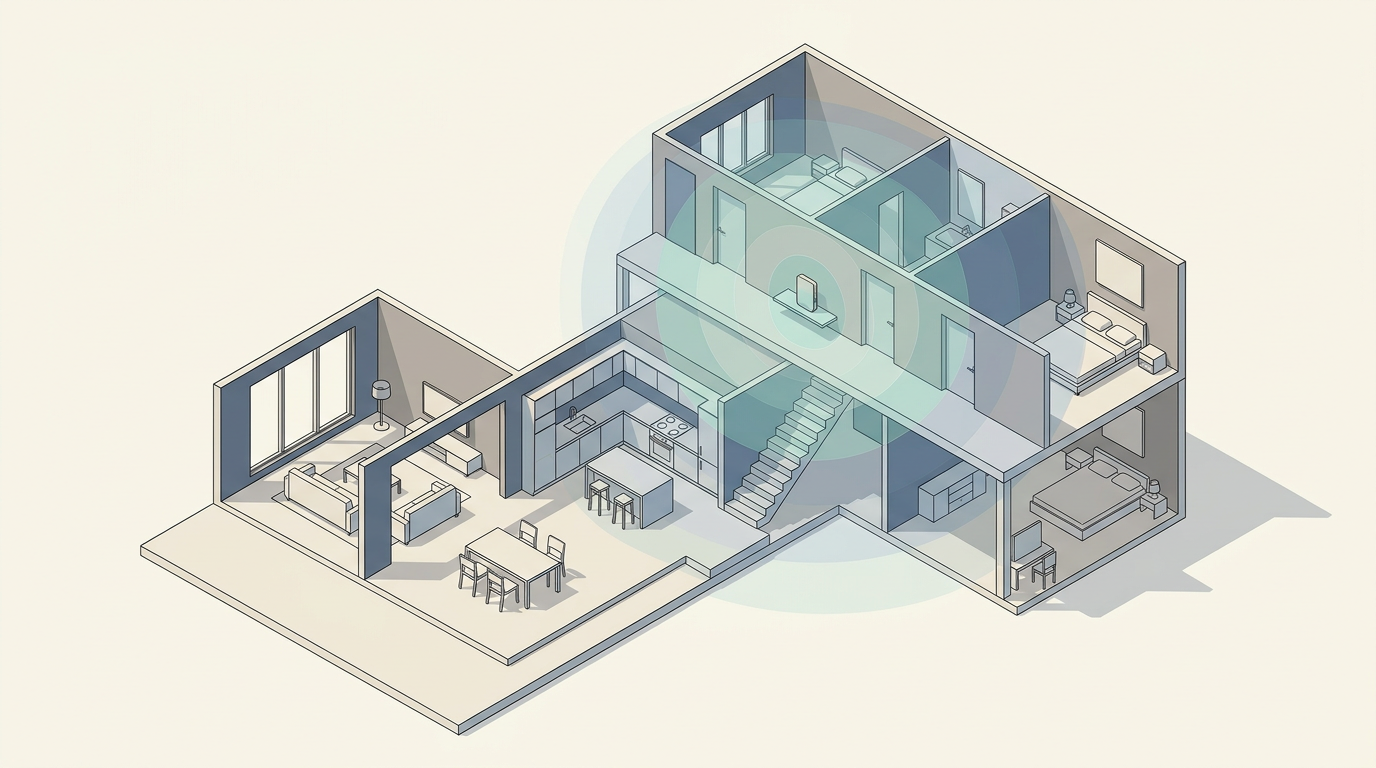
The modern home is increasingly defined not by its physical walls, but by the invisible reach of its wireless network. As remote work, streaming media, and the Internet of Things (IoT) become permanent fixtures of domestic life, the "dead zone" — that corner of the office or bedroom where the signal drops — is no longer a mere inconvenience. It is a structural failure. And like any structural failure, it has spawned an industry of remediation.
Wi-Fi extenders, also known as range extenders or repeaters, are devices that receive an existing wireless signal and rebroadcast it to cover areas the primary router cannot reach. Once a niche product purchased mainly by enthusiasts frustrated with large or oddly shaped floor plans, these devices have become a quiet staple of household infrastructure. The shift is not surprising. When a home doubles as an office, a classroom, and an entertainment hub — often simultaneously — the tolerance for connectivity gaps approaches zero.
From convenience to necessity
The trajectory of the Wi-Fi extender market mirrors the broader evolution of domestic connectivity expectations. A decade ago, a single router placed near the entryway sufficed for most households. Devices were fewer, bandwidth demands were modest, and the consequences of a dropped connection were limited to a buffering video. That calculus has changed fundamentally.
The proliferation of IoT devices — smart speakers, security cameras, connected appliances, wearable health monitors — means the average household now places dozens of simultaneous demands on a single network. Add to that the bandwidth requirements of high-definition video conferencing, cloud-based work applications, and multi-player gaming, and the router's original coverage radius becomes a binding constraint. The dead zone is no longer an annoyance; it is a bottleneck with professional and personal consequences.
Entry-level solutions like the TP-Link TL-WA850RE remain staples for basic remediation, offering 300Mbps speeds and simple WPS integration for those requiring straightforward coverage expansion. These devices serve a clear purpose: extending a signal into a single adjacent room or hallway at minimal cost. For many households, particularly smaller apartments, this tier of hardware is sufficient.
However, as bandwidth demands increase, the market has shifted toward dual-band hardware. Devices like the RE305 AC1200 provide more sophisticated management via dedicated apps, allowing users to toggle between the 2.4GHz and 5GHz frequencies. The distinction matters: the 2.4GHz band offers broader range but lower throughput, while the 5GHz band delivers faster speeds over shorter distances. The ability to manage this tradeoff — routing a video conference to the faster band while leaving background IoT traffic on the slower one — represents a meaningful step in network intelligence at the consumer level.
The final mile, inside the walls
For larger architectural footprints, the hardware demands are more rigorous. High-performance units now promise coverage for up to 3,000 square feet, supporting dozens of simultaneous devices without meaningful degradation. More robust models, such as the TP-Link RE450, incorporate external antennas and Gigabit Ethernet ports to minimize latency — a critical feature for applications where milliseconds matter, from real-time collaboration tools to cloud gaming.
These devices represent something worth pausing on: the final mile of a global data system, compressed into the space between a living room and a home office. Billions of dollars flow into undersea cables, data centers, and fiber-optic networks to deliver data to a household's front door. The extender's job is to carry that signal the last thirty feet — through drywall, around concrete, past the microwave. It is unglamorous work, but its failure is immediately felt.
The market is also being reshaped by mesh networking systems, which replace the hub-and-spoke model of a single router plus extenders with a distributed architecture of identical nodes. Mesh systems offer more seamless handoffs as a user moves through a home, though they typically come at a higher price point. The coexistence of traditional extenders and mesh systems suggests the market is stratifying along lines of home size, technical sophistication, and budget — much as the broader consumer electronics market has done for decades.
What remains open is whether the extender, as a product category, will be absorbed into more integrated solutions — routers with sufficient range to render them unnecessary, or mesh systems that become cheap enough to displace them entirely. For now, the extender occupies a durable middle ground: affordable, functional, and solving a problem that grows more acute with every new connected device added to the household. The digital architecture of the home, it turns out, demands as much attention as the physical one.
With reporting from Olhar Digital.
Source · Olhar Digital