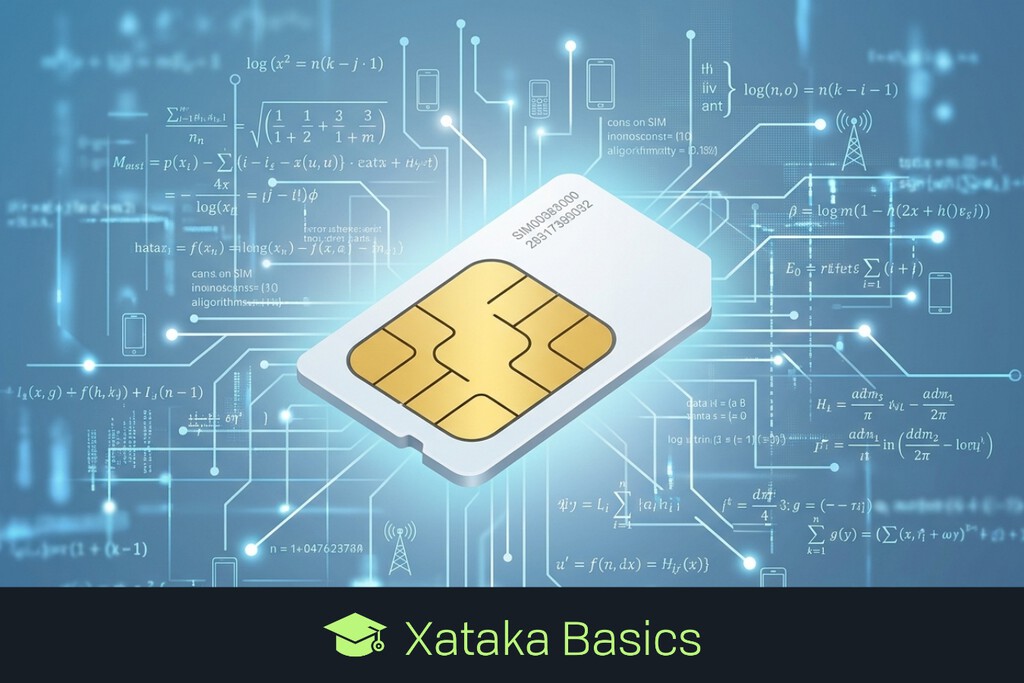
The physical SIM card, a fixture of mobile telephony since 1991, is entering the final phase of its long obsolescence. What began as a credit-card-sized module has shrunk through successive generations — Mini, Micro, Nano — each time surrendering a few more square millimeters to the relentless demand for internal device space. Now, with eSIM technology maturing and adoption broadening across manufacturers and carriers, the removable SIM tray is increasingly difficult to justify as anything other than a legacy concession.
The eSIM — short for embedded SIM — is a chip soldered permanently onto a device's motherboard. It performs the same authentication function as its plastic predecessor but eliminates the need for physical handling. Users download carrier profiles over the air, switch operators through a settings menu, and can maintain multiple lines on a single device without swapping cards. The shift reframes cellular connectivity as a software layer rather than a hardware dependency, a distinction with implications that extend well beyond convenience.
From miniaturization to elimination
The history of the SIM card is, in many ways, a history of diminishing returns on miniaturization. Each reduction in form factor — from the original 1FF standard down to the 4FF Nano-SIM — freed marginal space inside the handset chassis. But even the Nano-SIM still requires a tray mechanism, a spring-loaded slot, and a waterproof gasket. These components occupy volume, add mechanical complexity, and introduce a potential point of ingress for moisture and dust. For device engineers working within the tight thermal and spatial budgets of modern smartphones, the SIM slot represents an increasingly costly trade-off.
The eSIM eliminates that trade-off entirely. Without a tray, manufacturers gain flexibility in internal layout — room that can be allocated to larger batteries, additional antenna lines, or improved haptic motors. It also simplifies the industrial design of the exterior shell, removing one of the few remaining physical apertures on devices that have already shed headphone jacks and, in some cases, physical buttons. The engineering logic is straightforward: fewer openings mean better structural integrity and higher ingress protection ratings.
The pattern mirrors earlier transitions in consumer electronics. Optical disc drives disappeared from laptops not because discs ceased to function, but because the space and mechanical complexity they demanded became untenable as streaming and solid-state storage matured. The SIM tray is following a comparable arc — functional, but increasingly redundant in a world where its purpose can be fulfilled by firmware.
The friction that remains
If the engineering case for eSIM-only devices is clear, the ecosystem case is less tidy. Physical SIM cards remain deeply embedded in carrier distribution models, particularly in markets where prepaid service dominates and where consumers rely on the ability to purchase connectivity from a street vendor or airport kiosk. The act of inserting a card is, for many users worldwide, synonymous with getting online.
Regulatory environments also vary. Some jurisdictions have been slow to update frameworks around remote SIM provisioning, and questions about consumer lock-in persist. When connectivity is managed entirely through software, the balance of control between user and carrier can shift in subtle ways — profile management interfaces, for instance, are not yet standardized across platforms, and the ease of switching operators varies considerably by region and device.
There is also the matter of secondary devices. Wearables, tablets, connected cars, and IoT hardware have been among the earliest adopters of eSIM precisely because their form factors leave no room for a card slot. But the coexistence of eSIM and physical SIM in flagship smartphones suggests that manufacturers still see the tray as a hedge — a way to serve markets and use cases where embedded provisioning infrastructure has not yet caught up.
The current hybrid era, in which both technologies occupy the same device, is by definition transitional. The direction of travel points toward full integration, but the timeline depends less on engineering readiness than on the slower-moving variables of carrier economics, regulatory adaptation, and consumer habit. Whether the last SIM tray is sealed shut in five years or ten, the forces driving its removal are structural — and none of them are reversing.
With reporting from Xataka.
Source · Xataka