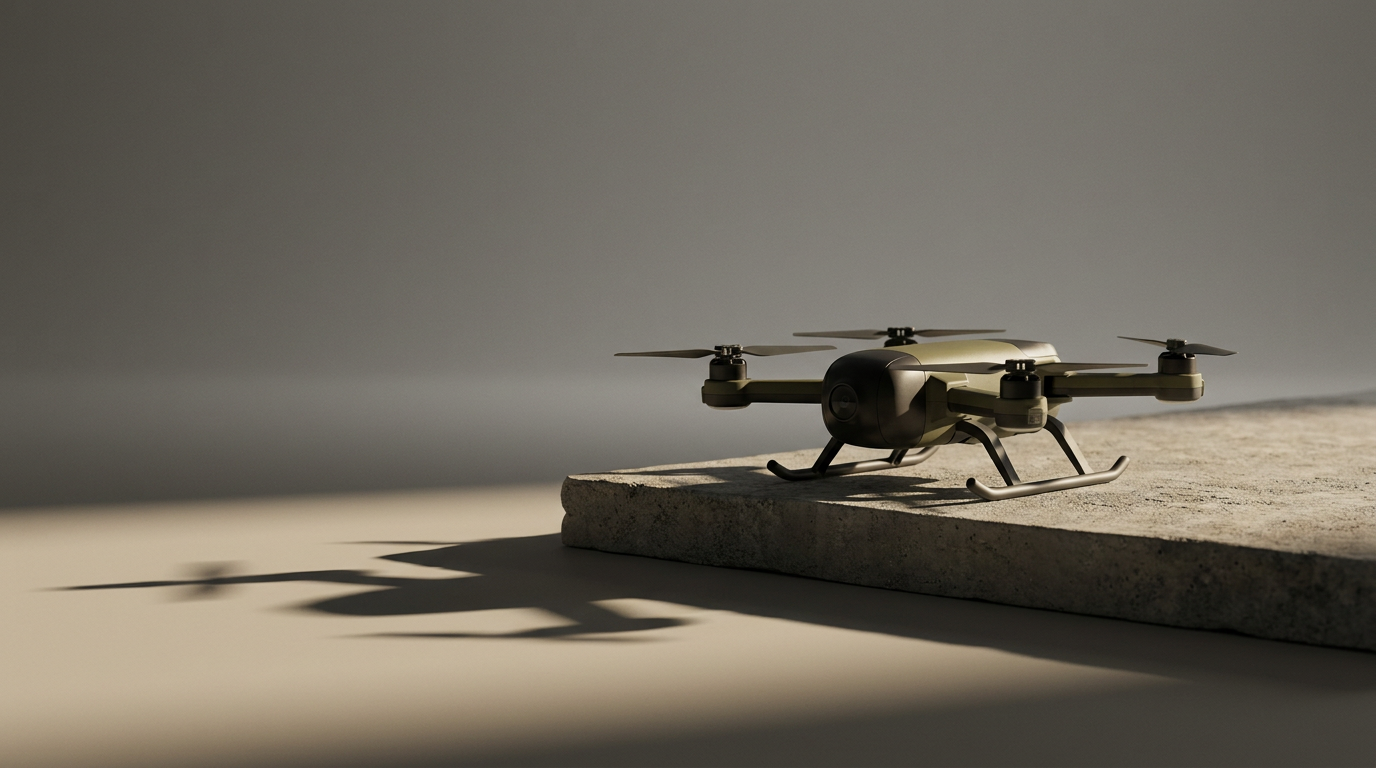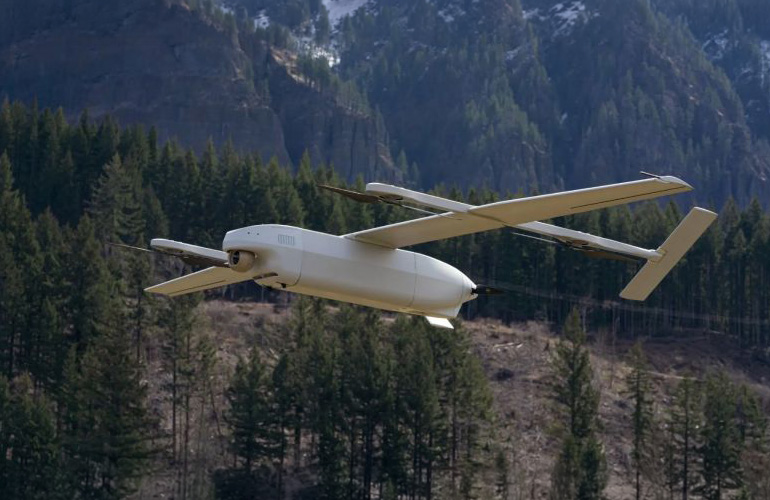
The Drones & Robotics AI Summit 2026, held recently in New York, offered a clear signal: the robotics industry has moved past its prototyping phase and into a period of operational deployment at scale. Ghost Robotics' Vision 60, a quadrupedal unmanned ground vehicle already embedded in U.S. military operations, was among the systems on display — not as a concept, but as fielded hardware. Private equity and venture capital investment in the sector has surpassed $30 billion over the past year, more than doubling previous levels. The capital surge reflects a broader recognition that autonomous systems are no longer speculative bets but strategic necessities.
The summit also spotlighted Heven AeroTech, the Israeli drone manufacturer that recently crossed the unicorn threshold. Its Z1 platform, a hydrogen-powered unmanned aerial vehicle, is designed for high-endurance missions in contested environments — a direct response to the operational shortcomings of battery-powered systems in prolonged deployments. Together, these companies illustrate a market that is bifurcating: ground-based robotics for persistent surveillance and patrol, and aerial platforms optimized for range and resilience.
From laboratory to theater of war
The acceleration of robotics investment is inseparable from the realities of contemporary conflict. Over the past several years, autonomous and semi-autonomous systems have migrated from supporting roles to central positions in military operations across the Middle East and Eastern Europe. Uncrewed aerial vehicles, once used primarily for reconnaissance, now perform strike missions, electronic warfare, and logistics resupply. Ground robots conduct perimeter security and explosive ordnance disposal in environments too dangerous or too remote for human operators.
This shift has redrawn the defense procurement landscape. Governments that once relied on decades-long development cycles for major weapons platforms are now fast-tracking contracts with agile robotics firms capable of iterating hardware in months rather than years. The result is a feedback loop: battlefield data informs design, which produces better machines, which generate more data. Companies like Ghost Robotics and Heven AeroTech sit at the center of this loop, translating operational demand into engineering output at a pace that legacy defense contractors have struggled to match.
The pivot toward hydrogen propulsion in aerial platforms is particularly telling. Battery-powered drones face hard physical limits on endurance and payload — constraints that become acute in military contexts where missions may last hours and communication links cannot be guaranteed. Hydrogen fuel cells offer significantly greater energy density, extending flight times and enabling operations in GPS-denied or communications-degraded environments where full autonomy, rather than remote piloting, becomes essential.
The generative AI and quantum computing horizon
Beyond hardware, the summit's forward-looking discussions centered on the convergence of generative AI and quantum computing as the next inflection point for autonomous systems. Generative AI — the class of models capable of producing novel outputs from learned patterns — has already transformed software. Its application to physical systems promises machines that can interpret unstructured environments, adapt to novel obstacles, and make decisions without pre-programmed scripts.
Quantum computing, still in its early commercial stages, introduces a different dimension. Classical processors struggle with the combinatorial complexity of real-time path planning, sensor fusion, and threat assessment across dynamic environments. Quantum-ready algorithms, designed to exploit superposition and entanglement for parallel computation, could collapse the time required for these calculations from seconds to near-instantaneous. The practical effect would be autonomous systems that reason about their surroundings rather than merely react to them.
The gap between these two capabilities — generative reasoning and quantum-speed processing — and their integration into physical hardware remains substantial. No commercially deployed robotic system yet operates on quantum infrastructure. But the research trajectory is clear enough that defense planners and industrial operators are already building architectures intended to accommodate quantum modules as they mature.
The public conversation around robotics remains fixated on humanoid form factors and consumer-facing demonstrations. The more consequential developments, however, are occurring in the computational backend: the software and processing layers that determine whether a machine can operate independently in high-stakes, unpredictable settings. The tension between the visible spectacle of humanoid robots and the less visible but more strategically significant advances in autonomy software defines the current moment. Whether the industry's enormous capital inflows ultimately reward the companies building for spectacle or those building for operational reality is a question the market has not yet answered.
With reporting from The Robot Report.
Source · The Robot Report