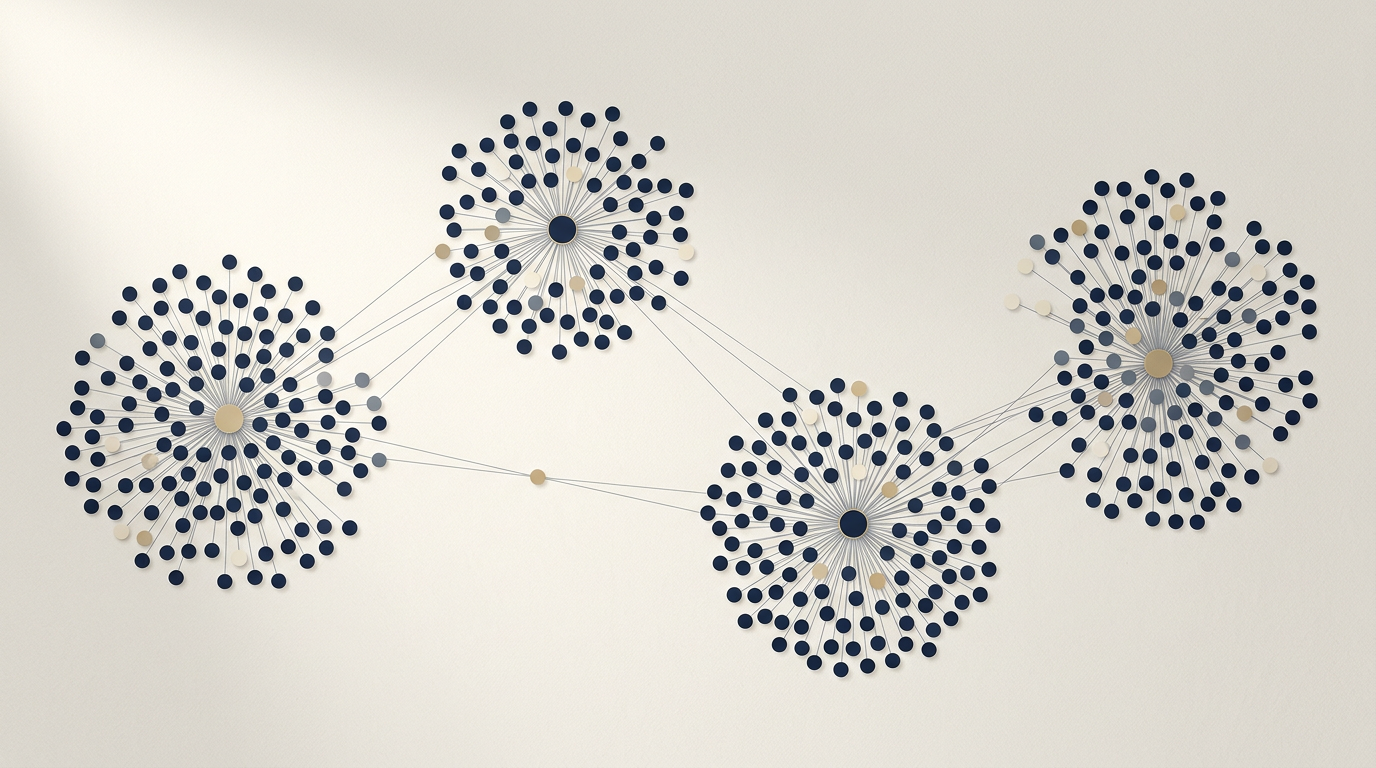
The Metropolitan Museum of Art has unveiled its catalog for the forthcoming "Costume Art" exhibition, a publication distinguished by commissioned assemblages from artists Julie Wolfe and Nathalie Agussol. Alongside the catalog, the museum will release a limited edition collectors box titled The Electric Body — the first such offering from the institution in roughly a decade.
The pairing of a major exhibition catalog with a dedicated collectors edition signals a deliberate move by the Met to position its fashion programming not merely as curatorial work but as a collectible cultural artifact in its own right. The decision to commission original assemblages — works composed from found or repurposed materials — rather than rely solely on exhibition photography or scholarly essays, suggests an effort to blur the boundary between documentation and art object.
Costume as Art Object
The Met's Costume Institute has long occupied an unusual position within the museum's broader mission. Founded in 1937 and folded into the Met in 1946, the department has periodically wrestled with the tension between fashion as applied craft and fashion as fine art. Its annual gala, which evolved into one of the most visible cultural events in the world, has done more than any academic argument to settle the question in the popular imagination. But the institutional framing still matters. A catalog that foregrounds commissioned art — assemblage work by Wolfe and Agussol — rather than treating garments as the sole visual subject, extends the argument further. It positions costume not as something to be merely recorded, but as a generative prompt for new creative work.
Julie Wolfe is known for large-scale installations that incorporate textiles, industrial materials, and organic matter. Nathalie Agussol's practice similarly engages with materiality and the body. Their inclusion in a Met catalog is notable because it frames the exhibition's intellectual project through the lens of contemporary art rather than fashion history alone. The catalog becomes a hybrid object: part scholarly record, part artist book.
The Collectors Box as Institutional Strategy
The release of The Electric Body as a limited edition collectors box carries its own significance. Museums have periodically experimented with premium publishing — the Victoria and Albert Museum, the Museum of Modern Art, and the Met itself have all produced special editions tied to landmark exhibitions. But such releases remain rare enough that each one functions as a statement of institutional confidence in a show's cultural weight.
For the Met to revive the format after a decade-long hiatus suggests several things at once. There is the commercial dimension: limited editions command premium pricing and attract a collector audience that overlaps with but is distinct from the typical museum visitor. There is also the archival dimension: a collectors box, by its physical presence and scarcity, asserts that the exhibition it accompanies is worth preserving in a form that exceeds the standard paperback catalog. In an era when exhibition documentation increasingly lives online — through social media, digital archives, and virtual walkthroughs — a deliberately physical, deliberately limited object pushes back against the assumption that access and abundance are always preferable to curation and constraint.
The title The Electric Body evokes Walt Whitman, whose "I Sing the Body Electric" has been referenced across disciplines for more than a century. Whether the allusion is intentional or coincidental, it reinforces the catalog's apparent thesis: that costume is not decoration laid upon the body but an extension of the body's expressive capacity.
The broader question the release raises is whether this signals a sustained shift in how the Costume Institute frames its exhibitions, or whether it remains an isolated gesture tied to a single show's ambitions. The Met's fashion programming has grown steadily in visibility and commercial importance, and the institutional vocabulary around it — assemblage, artist commissions, collectors editions — increasingly borrows from the fine art world. Whether that convergence enriches both fields or dilutes the specificity of each is a tension that the catalog, by its very design, leaves productively unresolved.
With reporting from Vogue.
Source · Vogue