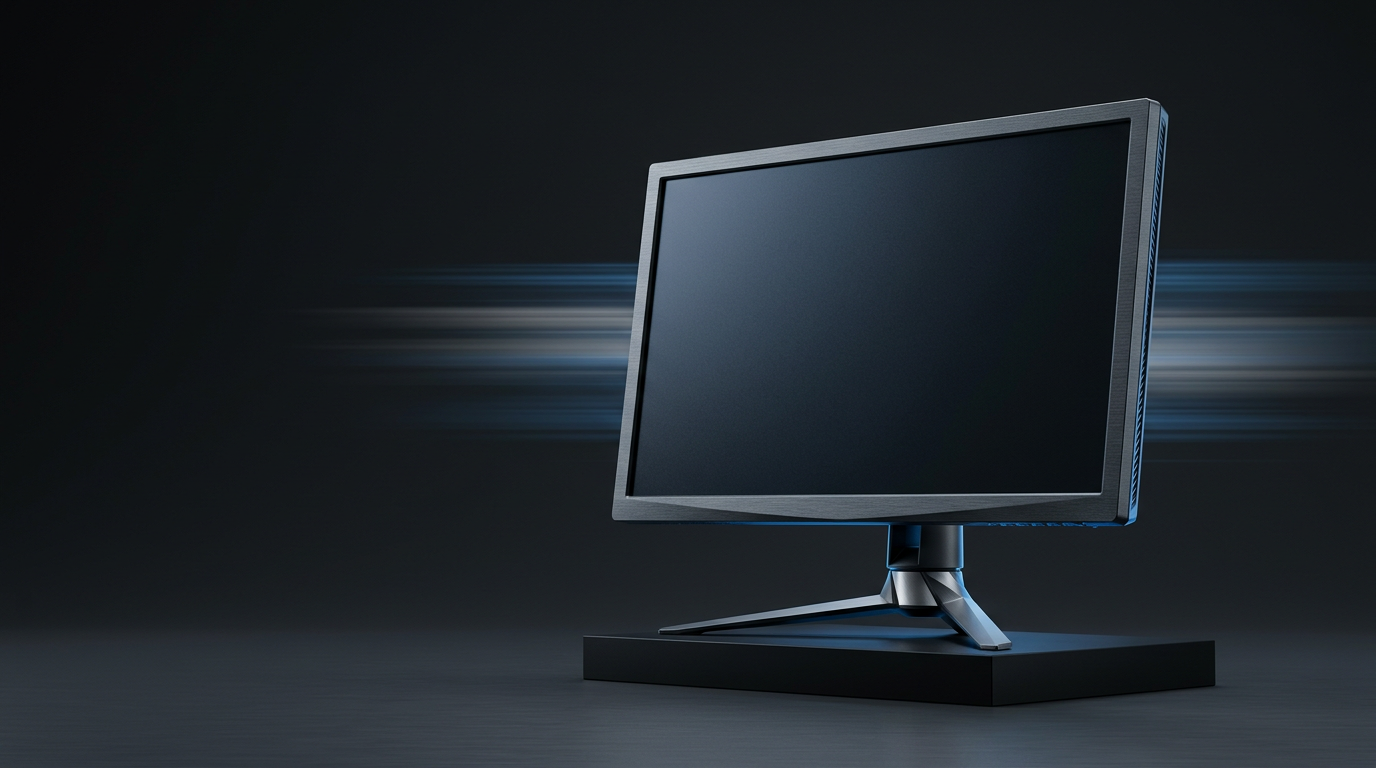
In the hierarchy of gaming hardware, the trade-off between resolution and raw speed remains a defining choice for competitive players. Samsung's Odyssey G40, a 27-inch monitor that eschews the industry's push toward 4K in favor of high-velocity frame rates, has recently seen a significant price correction in the Brazilian market — now retailing at nearly half its launch price. The discount, applied through a marketplace coupon, brings the G40 to a price point that undercuts many of its 144Hz competitors, let alone those operating at 240Hz.
The development is notable less for the deal itself than for what it reveals about the state of the gaming display market. As panel manufacturers race toward higher resolutions and larger form factors, a persistent segment of buyers continues to optimize for a different variable entirely: input-to-photon latency. The G40's price correction suggests that vendors are adjusting to meet that demand at scale.
The Case for Speed Over Pixels
The G40's technical profile is built around a 240Hz refresh rate paired with a 1ms gray-to-gray response time — metrics designed to minimize the perceptual lag that can determine the outcome of high-stakes play. At 1080p on a 27-inch panel, the pixel density sits at roughly 82 pixels per inch, a figure that falls well short of the sharpness offered by 1440p or 4K alternatives at the same screen size. For desktop productivity or media consumption, the trade-off is difficult to justify.
For competitive gaming, the calculus inverts. Titles that dominate the e-sports ecosystem — tactical shooters, battle royales, fighting games — reward frame rate and motion clarity far more than they reward fine detail. Professional players in these genres have long gravitated toward 1080p panels precisely because the lower resolution is easier for mid-range GPUs to drive at consistently high frame rates, reducing the need for expensive graphics hardware to keep pace with the display.
The G40's IPS panel adds a layer of versatility that older TN-based speed monitors lacked. IPS technology delivers wider viewing angles and more accurate color reproduction, narrowing the gap between a competition-oriented monitor and one suitable for everyday use. The inclusion of HDR10 support and compatibility with both Nvidia G-Sync and AMD FreeSync further stabilizes the visual experience, mitigating the screen tearing and stuttering that plague unsynchronized setups.
A Specialized Tool in a Broadening Market
Beyond the panel itself, the G40 emphasizes ergonomic flexibility — a necessity for extended sessions. The stand allows for comprehensive adjustments in height, tilt, and rotation, catering to the spatial requirements of a professional-leaning desk setup. These are features that were once reserved for premium business monitors but have become table stakes in the gaming segment as session lengths increase and awareness of postural health grows.
The device is not without its concessions. The absence of a USB-C port limits its utility as a hub for modern laptops, and the Full HD resolution marks it clearly as a specialized peripheral rather than a general-purpose workstation display. These omissions are deliberate: they keep the bill of materials — and therefore the retail price — within reach of the audience most likely to buy it.
The broader pattern is worth watching. The gaming monitor market has bifurcated into two distinct currents. One pushes toward OLED panels, 4K resolution, and ever-larger screens, targeting immersive single-player experiences and content creation. The other refines the fundamentals of speed and responsiveness at accessible price points, serving a competitive community that treats monitors more like precision instruments than entertainment screens.
The G40's steep discount does not signal the obsolescence of 1080p so much as its maturation. The technology is well understood, manufacturing costs have declined, and the performance envelope is thoroughly mapped. What remains is a question of how long this segment sustains dedicated product lines — or whether rising GPU power eventually makes the resolution compromise unnecessary, collapsing the two currents into one.
With reporting from Tecnoblog.
Source · Tecnoblog