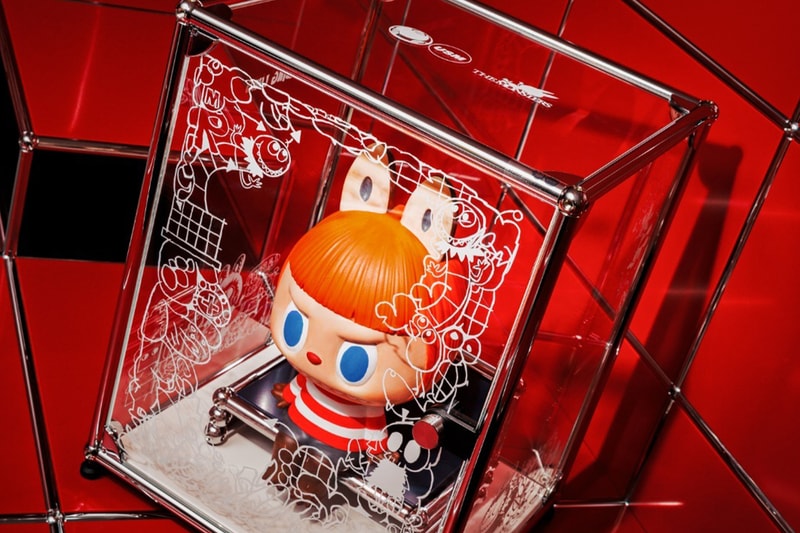
In the landscape of high-end interiors, USM Haller occupies a particular niche: the Swiss modular system, built from chrome-plated steel tubes and powder-coated metal panels, has functioned as a kind of architectural shorthand for rationalist taste since its introduction in the 1960s. Its grid-based logic leaves little room for ornament. Every surface serves a structural purpose. That austerity is precisely what makes the brand's latest move at Milan Design Week notable — a collaboration with Hong Kong-born artist and illustrator Kasing Lung that wraps USM's rigid geometry in the playful iconography of "The Monsters."
The collection, titled "Wonderland of the Monsters," applies Lung's signature character illustrations directly to USM Haller surfaces. The immersive showcase, supported by retailer Lane Crawford and creative production house How2Work, is scheduled to run from April 20 to April 25, 2026. Alongside the furniture line, the installation will debut a limited-edition collectible titled "Beautiful Thing!"
From Art Toys to Furniture Systems
Kasing Lung's "The Monsters" — a cast of creatures drawn from Nordic folklore and led by the grinning, mischievous Labubu — originated in the art toy ecosystem, a market segment where limited-run vinyl figures circulate among dedicated collectors. Over the past several years, the franchise has expanded well beyond that niche. Labubu in particular has become a recognizable figure in streetwear and pop culture circles across Asia, propelled in part by partnerships with Pop Mart, the Chinese collectible toy platform that brought the characters to a mass retail audience.
The trajectory mirrors a broader pattern in which character-driven intellectual property moves upstream — from blind-box figurines and plush toys into fashion collaborations, gallery exhibitions, and now furniture. The USM partnership represents a further step in that escalation. Where previous collaborations placed Lung's characters on accessories or apparel, applying them to a modular furniture system associated with corporate interiors and design-world credibility signals a different kind of ambition. It positions "The Monsters" not merely as collectible art but as a design language capable of inhabiting domestic and professional spaces.
For USM, the calculus is different but complementary. The Haller system has maintained its relevance for decades through material consistency and modularity — the same ball-joint connectors and panel dimensions have been in production since the system's original design by Fritz Haller. That longevity is a strength, but it also carries a risk of perceived stasis. Heritage furniture brands across the industry have faced a recurring challenge: how to remain legible to younger consumers without diluting the design principles that established their reputation in the first place.
Character IP as a Design Strategy
The collaboration sits at the intersection of two forces reshaping the design market. On one side, heritage manufacturers are experimenting with cultural collaborations to reach audiences that may not enter through traditional architecture or interiors channels. On the other, character-based intellectual property — once confined to entertainment and toy industries — is being treated as a legitimate creative input in fields that historically kept it at arm's length.
Milan Design Week has increasingly served as a stage for these crossovers. The annual event, centered on the Salone del Mobile furniture fair but extending across the city through hundreds of independent installations, has grown more porous to fashion, technology, and pop culture over the past decade. Luxury fashion houses now mount elaborate installations alongside furniture manufacturers. The presence of an art toy franchise in that context is less a departure than a continuation of the fair's expanding definition of design.
What remains to be seen is whether collaborations of this kind function as one-off spectacles — effective at generating attention during a single fair cycle — or whether they indicate a durable shift in how modular furniture systems are marketed and consumed. USM's design identity is built on the premise that the system is a neutral container, adaptable to any context through reconfiguration rather than decoration. Lung's characters introduce narrative and personality onto surfaces that were designed to recede. Whether those two impulses can coexist beyond a limited edition, or whether the tension between them is precisely the point, is a question the market will answer over time.
With reporting from Hypebeast.
Source · Hypebeast