The lifecycle of an automobile is usually dictated by the fickle whims of consumer taste or the relentless march of mechanical innovation. In Brazil, however, the disappearance of certain iconic models from showroom floors has been driven by a more clinical force: the evolution of the law. As the nation's regulatory framework for safety and environmental impact has matured, several mainstays of the Brazilian road have been legislated into retirement.
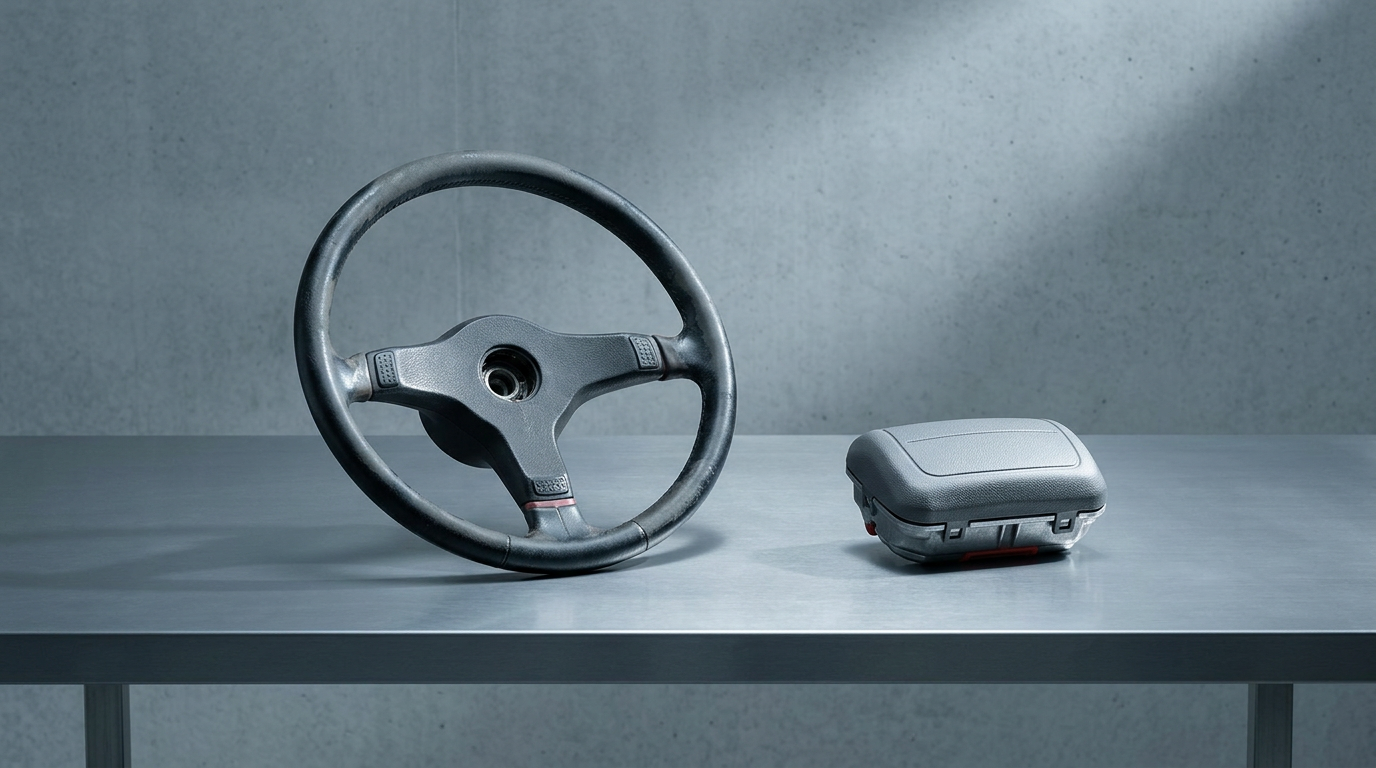
These "prohibitions" are less about a ban on the vehicles themselves — existing models remain legal to drive — and more about a refusal to allow the sale of new units that fail to meet modern benchmarks. The Fiat Uno Mille Fire, a utilitarian staple of Brazilian transit for decades, serves as a primary example. Despite its enduring popularity, it eventually fell short of the stringent safety requirements that now mandate features like airbags and anti-lock braking systems (ABS) across all new production lines.
The Regulatory Ratchet
Brazil's automotive safety regime has tightened in distinct waves. The country's national traffic council, CONTRAN, has issued successive resolutions over the past two decades requiring the phased adoption of equipment once considered optional. Frontal airbags and ABS became mandatory for all new passenger vehicles, a measure that effectively rendered several budget-oriented models unviable. For manufacturers, the calculus was straightforward: retrofitting aging platforms with modern safety hardware would cost more than the market segment could bear. Rather than re-engineer vehicles whose architecture dated back to the 1980s and 1990s, automakers chose discontinuation.
The Fiat Uno Mille was not alone. Other models built on legacy platforms faced the same fate. The Volkswagen Kombi, produced in Brazil for more than half a century, ceased production when it could no longer comply with updated crash-test and emissions standards. The Ford F-1000, once ubiquitous in rural Brazil, had already been phased out years earlier under similar pressures. Each case followed the same pattern: a vehicle designed for an era of minimal regulation colliding with a framework that had moved decisively toward occupant protection and environmental accountability.
Emissions standards have operated as a parallel force. Brazil's PROCONVE program — the national vehicle emissions control initiative modeled in part on European and North American precedents — has progressively lowered permissible levels of pollutants from new vehicles. Older engine designs, particularly those without electronic fuel injection or catalytic converters meeting current thresholds, became ineligible for new-vehicle certification. The combined effect of safety and emissions mandates created a regulatory pincer that left legacy platforms with no commercial path forward.
Accessibility Versus Adequacy
The discontinuation of these models carries an economic dimension that extends beyond nostalgia. Vehicles like the Uno Mille occupied a specific niche: affordable new-car ownership for lower-income buyers. Their removal from the market has shifted that demographic toward the used-car segment or toward newer entry-level models at higher price points. The tension between regulatory ambition and market accessibility is not unique to Brazil — India faced a comparable dynamic when its Bharat Stage emission norms forced the retirement of budget vehicles — but it is particularly acute in a country where the cost gap between the cheapest new car and median household income remains substantial.
Automakers have responded by developing new low-cost platforms designed from the outset to meet current standards, though these vehicles inevitably carry higher sticker prices than the models they replaced. The question of whether regulation has outpaced the purchasing power of a significant portion of the population remains a point of friction between industrial policy objectives and social mobility.
What emerges is a landscape in which the Brazilian road itself becomes a living archive. Older Uno Milles, Kombis, and their contemporaries continue to circulate — maintained, repaired, and traded in a secondary market that regulation does not reach in the same way. The assembly lines have moved on, but the vehicles have not disappeared. The gap between what is sold and what is driven widens with each regulatory cycle, raising an unresolved question: at what point does the pursuit of safer, cleaner new vehicles begin to calcify the fleet it was meant to modernize?
With reporting from Canaltech.
Source · Canaltech