The wearable technology market is entering another phase of strategic discounting, with major manufacturers adjusting inventories ahead of the next product cycle. Brands including Apple, Samsung, Huawei, and Xiaomi are offering price reductions of up to 40 percent on current-generation smartwatches — devices that, in many cases, still represent the most advanced biometric hardware available to consumers. The pattern is familiar but increasingly consequential: each discount window reveals not just retail dynamics but the underlying competitive pressures reshaping a category that has quietly evolved from gadget to health infrastructure.
From Accessories to Diagnostic Tools
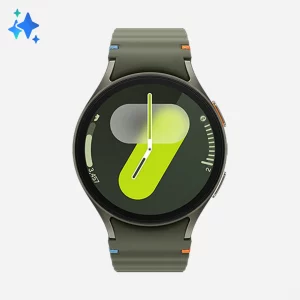
The smartwatch began its commercial life as a notification mirror — a smaller screen tethered to a larger one. That era is effectively over. The devices now receiving markdowns carry sensor arrays that would have seemed implausible a few years ago: optical heart-rate monitors, blood oxygen saturation (SpO2) tracking, electrocardiogram (ECG) capabilities, skin temperature sensors, and increasingly sophisticated sleep-stage analysis. Samsung's Galaxy Watch7 incorporates estimated glucose monitoring, a feature that edges the device closer to the territory of continuous glucose monitors used in clinical diabetes management. Apple's Watch Series 11 continues to refine its fall detection and cardiac rhythm notification systems, features that have generated documented cases of early medical intervention.
This trajectory mirrors a broader pattern in consumer electronics: once a device category proves its utility beyond entertainment, it begins to attract regulatory attention and clinical validation. The U.S. Food and Drug Administration has already cleared certain smartwatch ECG functions as medical devices, and the European Union's Medical Device Regulation framework is increasingly relevant to wearable manufacturers. The implication is that the smartwatch is no longer competing solely on aesthetics or ecosystem convenience. It is competing on the credibility of its health data — and that changes the calculus for both manufacturers and buyers.
The discounted models currently available span a wide range of capability and price. At the premium end, titanium casings and sapphire crystal displays signal durability and status. At the entry level, devices from Xiaomi's Redmi line and Amazfit offer extended battery life and core fitness tracking at a fraction of the cost. The gap between these tiers is narrowing in some respects — display quality, GPS accuracy, water resistance — while widening in others, particularly in the sophistication of health analytics and the depth of integration with proprietary software ecosystems.
Ecosystem Lock-In and the Pricing Lever
Pricing strategy in the smartwatch market cannot be separated from the broader platform wars. Apple's wearable line is tightly coupled to the iPhone and the Health app ecosystem. Samsung's watches run on Wear OS with a heavy Galaxy overlay, binding users to Samsung's health platform and, by extension, its broader device portfolio. For these companies, a discounted watch is not a margin sacrifice — it is a customer acquisition tool for an ecosystem that generates recurring value through services, accessories, and future hardware upgrades.
Xiaomi and Amazfit operate under a different logic. Their margins on hardware are thinner by design, and their ecosystem lock-in is weaker. What they offer instead is raw specification value: longer battery life, bright AMOLED displays, and competent fitness tracking at prices that undercut premium rivals by significant margins. This forces the top tier to justify its pricing not through features alone but through materials, data analytics depth, and the perceived reliability of health measurements.
The result is a market where the consumer benefits from competition on multiple fronts simultaneously. Premium brands push sensor innovation and clinical credibility. Budget brands push accessibility and endurance. Both are compelled to discount periodically as product cycles accelerate — annual or even sub-annual refreshes leave prior-generation stock that must move.
What remains unresolved is whether the smartwatch market will consolidate around a few dominant health platforms or fragment further as new entrants — potentially from the medical device industry itself — bring their own credibility to wrist-worn hardware. The current discount cycle offers accessible entry points, but the longer game is about which company's health data a consumer will trust with their most personal metrics. That question has no clear answer yet, and the tension between ecosystem depth and open accessibility is likely to define the next chapter of the category.
With reporting from Olhar Digital.
Source · Olhar Digital