The mechanical keyboard, once a relic of the early computing era, has undergone a sophisticated renaissance. What began as a niche revival among competitive gamers and hobbyist typists has broadened into a mainstream movement spanning professional workspaces, content creation studios, and home offices. The shift is not merely aesthetic. It reflects a deeper recalibration of how users relate to the physical tools of digital work — and how manufacturers are responding to that demand.
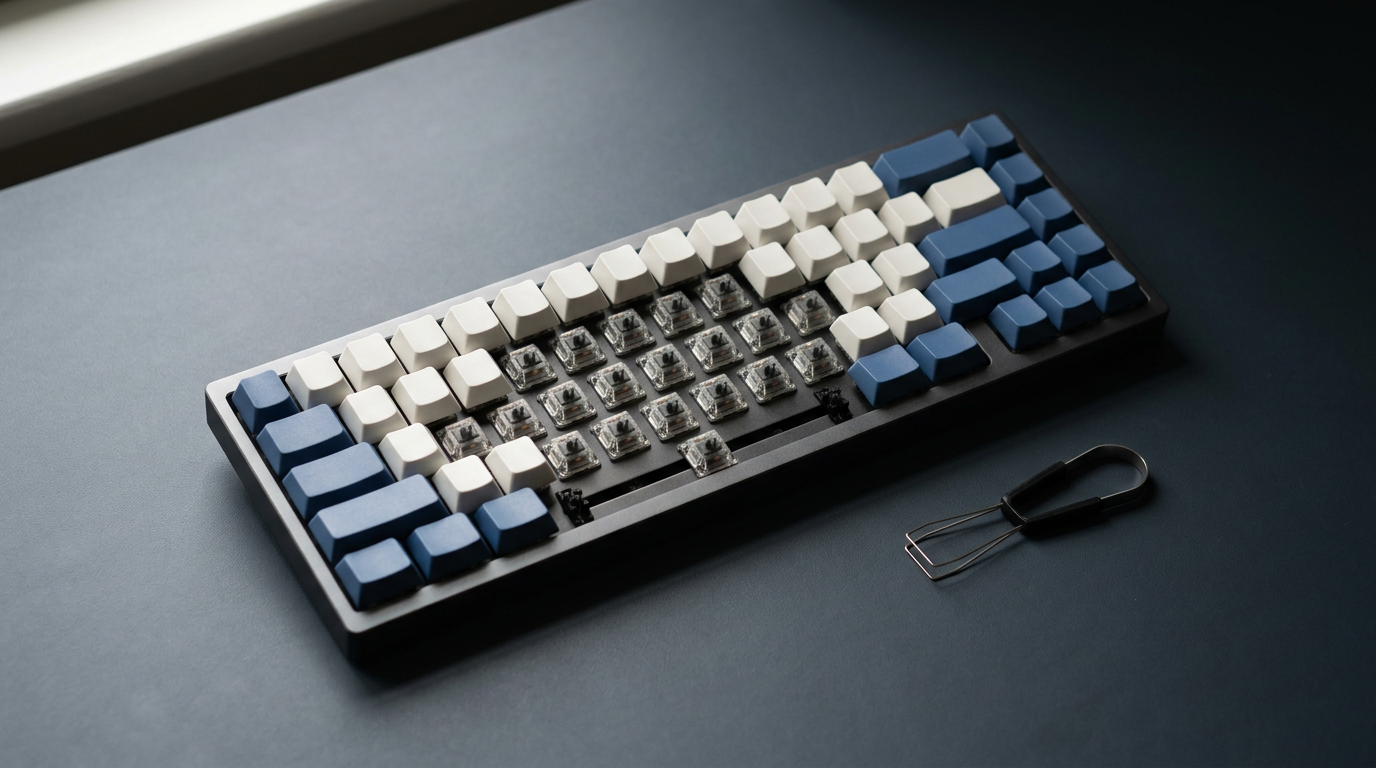
The core appeal remains tactile feedback: the physical confirmation of a keystroke that membrane keyboards, dominant since the cost-cutting wave of the 1990s, largely eliminated. Mechanical switches — spring-loaded mechanisms beneath each key — offer distinct actuation profiles. A Brown switch provides quiet tactile resistance suited to long typing sessions; a Blue delivers an audible click favored by those who want sonic confirmation of input; a Red offers a linear, uninterrupted press preferred in fast-paced gaming. The choice of switch has become, in effect, a personal ergonomic statement, one that shapes the rhythm and feel of hours spent at a desk.
From Enthusiast Niche to Mass-Market Category
For much of the 2010s, mechanical keyboards occupied a bifurcated market. On one end sat legacy brands with utilitarian designs aimed at IT professionals. On the other, a thriving custom-build community pushed artisan keycaps, hand-lubricated switches, and bespoke aluminum cases into price ranges that rivaled high-end consumer electronics. What has changed in recent years is the emergence of a productive middle ground.
Brands such as Redragon and HyperX have been instrumental in this shift. By leveraging scaled manufacturing and direct-to-consumer distribution, they offer mechanical boards at price points that compete with premium membrane alternatives. Their product lines now span full-sized layouts — complete with number pads for data-heavy workflows — down to ultra-compact "60%" frames like the Redragon Fizz, which strip away the numpad, function row, and navigation cluster to leave only the alphanumeric essentials. The compact form factor is not simply a cost-saving measure. It reflects a broader design philosophy rooted in minimalism and workspace optimization: a smaller keyboard footprint allows for more natural mouse positioning, reducing shoulder strain during extended sessions.
Anti-ghosting technology, which ensures that simultaneous keypresses register accurately, has also migrated from premium-tier boards into entry-level offerings. Features that once justified steep markups — hot-swappable switches, programmable macro layers, detachable USB-C cables — are increasingly standard across the category.
Expression as a Design Layer
Beyond ergonomics and performance, the mechanical keyboard has become a surface for personal expression. RGB backlighting, once a polarizing novelty, now serves both functional and aesthetic roles — illuminating key legends in dim environments while allowing users to customize color profiles per application or mood. Keycap sets in varied materials, profiles, and colorways have spawned a secondary market of their own, with PBT plastic (more durable and resistant to the shine that develops on cheaper ABS caps) becoming a common differentiator in product listings.
This convergence of utility and identity mirrors patterns seen in adjacent categories. Smartphones, headphones, and even laptop chassis have all traveled a similar arc — from purely functional objects to extensions of personal style. The keyboard, as the primary physical interface between a user and a machine, may be the most intimate of these tools, and its customization carries a proportional weight.
The trajectory suggests a market that is maturing rather than peaking. As remote and hybrid work arrangements persist, the home desk has become permanent infrastructure for a significant share of knowledge workers. The willingness to invest in peripheral quality follows logically. Yet the tension between democratized pricing and the enthusiast community's push toward ever-more-refined builds remains unresolved. Whether mass-market brands continue to absorb features from the custom segment — or whether the two tiers diverge further — will shape the category's next chapter.
With reporting from Olhar Digital.
Source · Olhar Digital