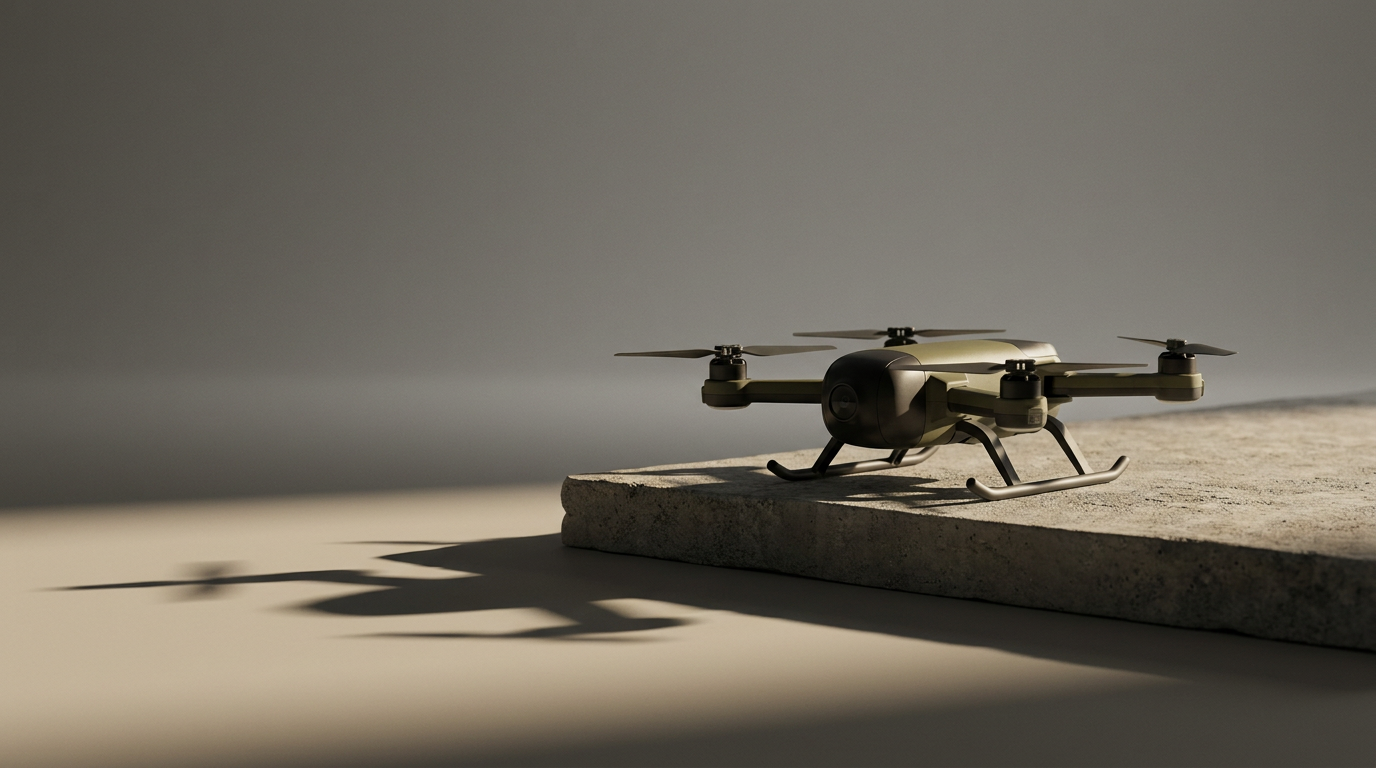
Sergej Beskrestnov, known in Ukrainian defense circles by the call sign "Flash," survived a targeted drone strike at his private residence this week. Beskrestnov serves as a technical advisor to Ukraine's Minister of Defense, specializing in the electronic warfare and drone integration systems that have become central to the conflict. The attack, which struck his home rather than a military installation, marks a notable escalation in how the war's belligerents define and pursue high-value targets.
The strike did not occur on a frontline or near a command post. It reached a civilian address, aimed at a figure whose contribution to the war effort is intellectual rather than kinetic. Military analyst Roger Djupsjö has suggested the precision and character of the attack indicate deliberate targeting rather than incidental frontline spillover — a distinction that carries significant implications for how modern conflicts are waged against the personnel who design their technical architecture.
The Strategist as Target
For most of the history of armed conflict, the calculus of targeted killing centered on command authority. Generals, political leaders, and field commanders sat atop the priority list because removing them disrupted chains of command. The logic was hierarchical: eliminate the decision-maker, and the decisions stop flowing.
The attempt on Beskrestnov suggests that calculus has shifted. In a war where electronic warfare — the use of electromagnetic spectrum to disrupt enemy communications, radar, and drone guidance — can determine the outcome of engagements as decisively as artillery, the technologist who designs countermeasures or optimizes drone swarm tactics holds a form of strategic leverage that is difficult to replace. Unlike a battalion commander, whose successor can be promoted from within an established chain, a specialist who understands the interaction between consumer-grade technology and military-grade electronic systems represents a concentration of institutional knowledge that does not transfer easily.
This pattern has precedent. Throughout the conflict, both sides have reportedly targeted logistics coordinators, intelligence analysts, and communications specialists with increasing frequency. The drone strike on Beskrestnov fits within a broader trend in which the definition of "combatant" expands to encompass anyone whose expertise materially sustains a warfighting capability — regardless of whether that person has ever held a weapon.
Electronic Warfare and the Value of Expertise
The war in Ukraine has functioned as a proving ground for electronic warfare at a scale not seen in decades. Signal jamming, GPS spoofing, and the rapid adaptation of commercial drone technology for military purposes have created an environment where technical agility often matters more than raw firepower. Advisors like Beskrestnov, who operate at the intersection of consumer technology and defense systems, occupy a role that did not exist in previous conventional conflicts at this level of importance.
The irony of the attack is difficult to overlook: the very category of weapon used against Beskrestnov — a drone — belongs to the domain he has helped Ukraine master. The attempt reflects not only a desire to remove a capable adversary but also an implicit acknowledgment of the effectiveness of the systems he has helped develop and refine. In that sense, the strike serves as a perverse form of validation.
The broader question the incident raises extends beyond Ukraine. As militaries worldwide invest in autonomous systems, electronic countermeasures, and AI-driven targeting, the individuals who build and maintain those capabilities become strategic assets in themselves. Protecting them becomes a security challenge that blurs the line between civilian life and the theater of operations. A defense advisor working from a home office is, in functional terms, as embedded in the war effort as an officer in a command bunker — but without the bunker's physical protection.
Beskrestnov survived. The systems he advises on continue to operate. But the strike at his residence poses a question that neither Ukraine nor any other nation integrating technical specialists into its defense apparatus has fully answered: how does a state protect the people whose knowledge constitutes a weapons system, when those people live as civilians outside any fortified perimeter? The tension between the increasing strategic value of technical expertise and the vulnerability of the individuals who hold it is unlikely to resolve itself. If anything, the incentive structure points toward escalation.
With reporting from Dagens Nyheter.
Source · Dagens Nyheter