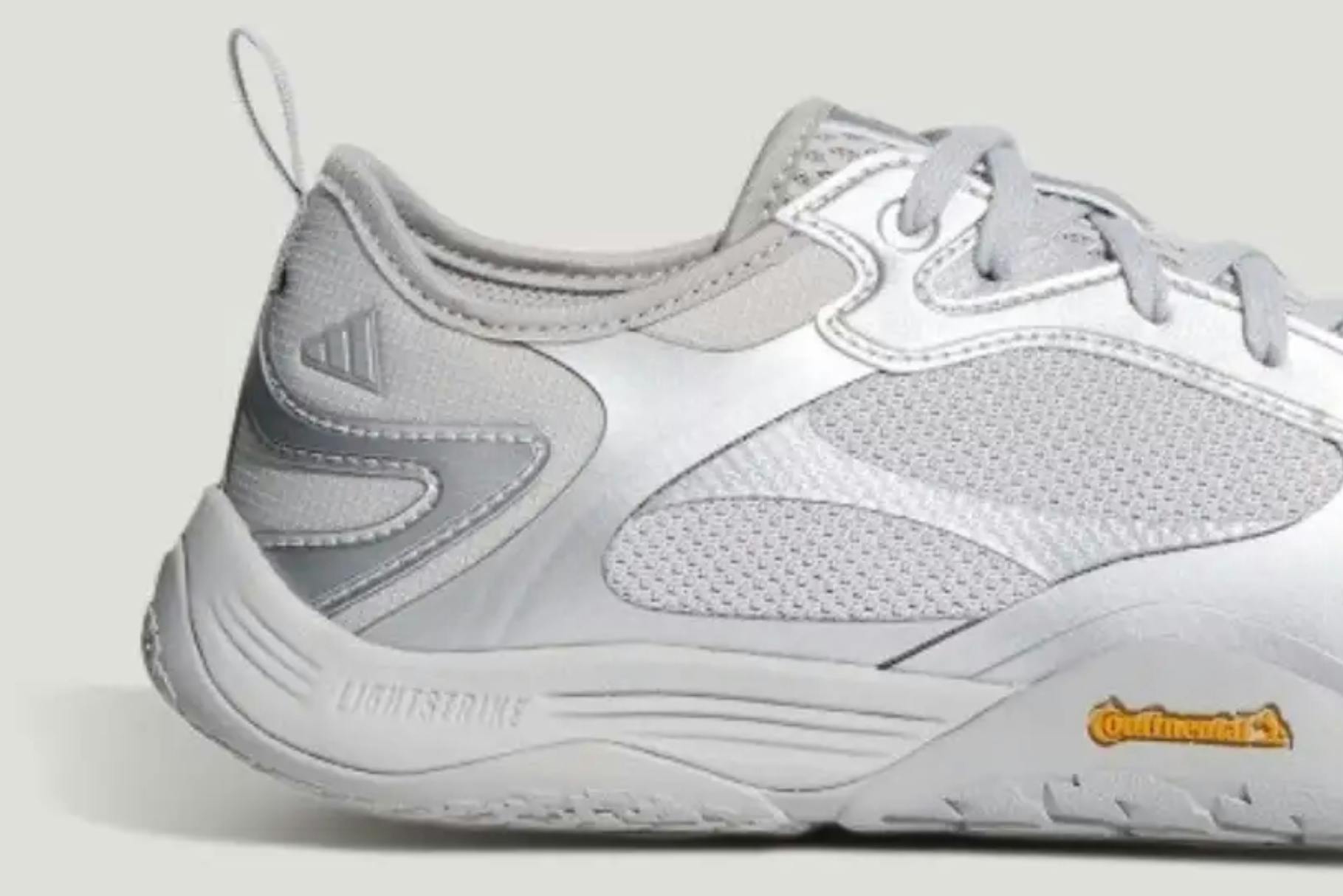
For several seasons, the sneaker market has been defined by a return to the low profile. Adidas rode that wave with considerable success, reviving heritage "flat" models like the Samba and Gazelle and turning them into ubiquitous streetwear staples. Now, the brand appears to be pushing that reductionist philosophy to its logical conclusion. The upcoming Groundflow marks Adidas' entry into the "barefoot" category — a segment of footwear designed to offer the wearer maximum tactile feedback by stripping away as much material as possible between the foot and the ground.
The move is notable less for the shoe itself than for what it signals about the direction of a major sportswear brand. Barefoot footwear has existed on the margins of the industry for well over a decade, championed by niche performance labels and biomechanics enthusiasts. Adidas bringing a model to market under its own name suggests the category has crossed a threshold from subculture curiosity to commercially viable proposition.
From niche performance to mainstream silhouette
The barefoot shoe concept traces its modern lineage to the mid-2000s, when a growing body of interest in natural running mechanics began to challenge the prevailing orthodoxy of maximalist cushioning. Vibram's FiveFingers, with their individual toe pockets, became the most visible — and most polarizing — expression of the idea. New Balance followed with its Minimus line, offering a less radical aesthetic while preserving the core principle of minimal sole thickness. Both products found loyal followings among trail runners, CrossFit practitioners, and physical therapists, but neither broke through into broader consumer fashion.
What has changed is context. The sneaker market's center of gravity has shifted away from the chunky, platform-soled silhouettes that dominated the late 2010s and early 2020s. The revival of slim, low-profile shoes — a trend Adidas itself helped accelerate — has primed consumers to accept footwear that sits closer to the ground. The Groundflow, in this reading, is not a radical departure but a natural extension of an aesthetic trajectory already in motion.
The shoe's construction reflects that dual ambition of technical credibility and visual restraint. A lightweight, breathable mesh upper keeps mass to a minimum, while the outsole uses Continental rubber — the same supplier Adidas has partnered with for years on running models — to provide high-traction grip. The choice of Continental is a deliberate signal: it anchors the Groundflow in performance heritage rather than positioning it as a fashion-first experiment.
The strategic calculus
For Adidas, the timing carries strategic weight. The brand has spent recent seasons rebuilding momentum around retro silhouettes after a turbulent period that included the unwinding of its Yeezy partnership. The Samba and Gazelle revivals delivered strong commercial results, but heritage models carry an inherent ceiling — they depend on nostalgia cycles that eventually cool. A forward-looking category like barefoot footwear offers a different kind of narrative: one rooted in function and innovation rather than archive mining.
There is also a competitive dimension. Nike and New Balance have both invested in lightweight, minimal constructions across their performance lines. The barefoot segment, while still small relative to the broader sneaker market, sits at the intersection of wellness culture, outdoor activity, and everyday wear — three consumer currents that show no sign of receding. A credible entry from Adidas could reshape how the category is perceived, pulling it further from its specialist origins and into general rotation.
The Groundflow is expected to debut in a palette of black, silver, cream, and light blue, though a formal release date has not been announced. The color selection itself is telling — muted, versatile, designed to integrate into existing wardrobes rather than demand attention.
Whether the barefoot category can sustain mainstream interest once the novelty fades remains an open question. The history of sneaker trends is littered with functional concepts that burned bright and receded — toning shoes, maximalist foam runners, knit uppers as a standalone selling point. The tension worth watching is between the category's genuine biomechanical proposition and the fashion cycle's tendency to move on. Adidas is betting, at least with this release, that the two forces can coexist long enough to matter.
With reporting from Highsnobiety.
Source · Highsnobiety