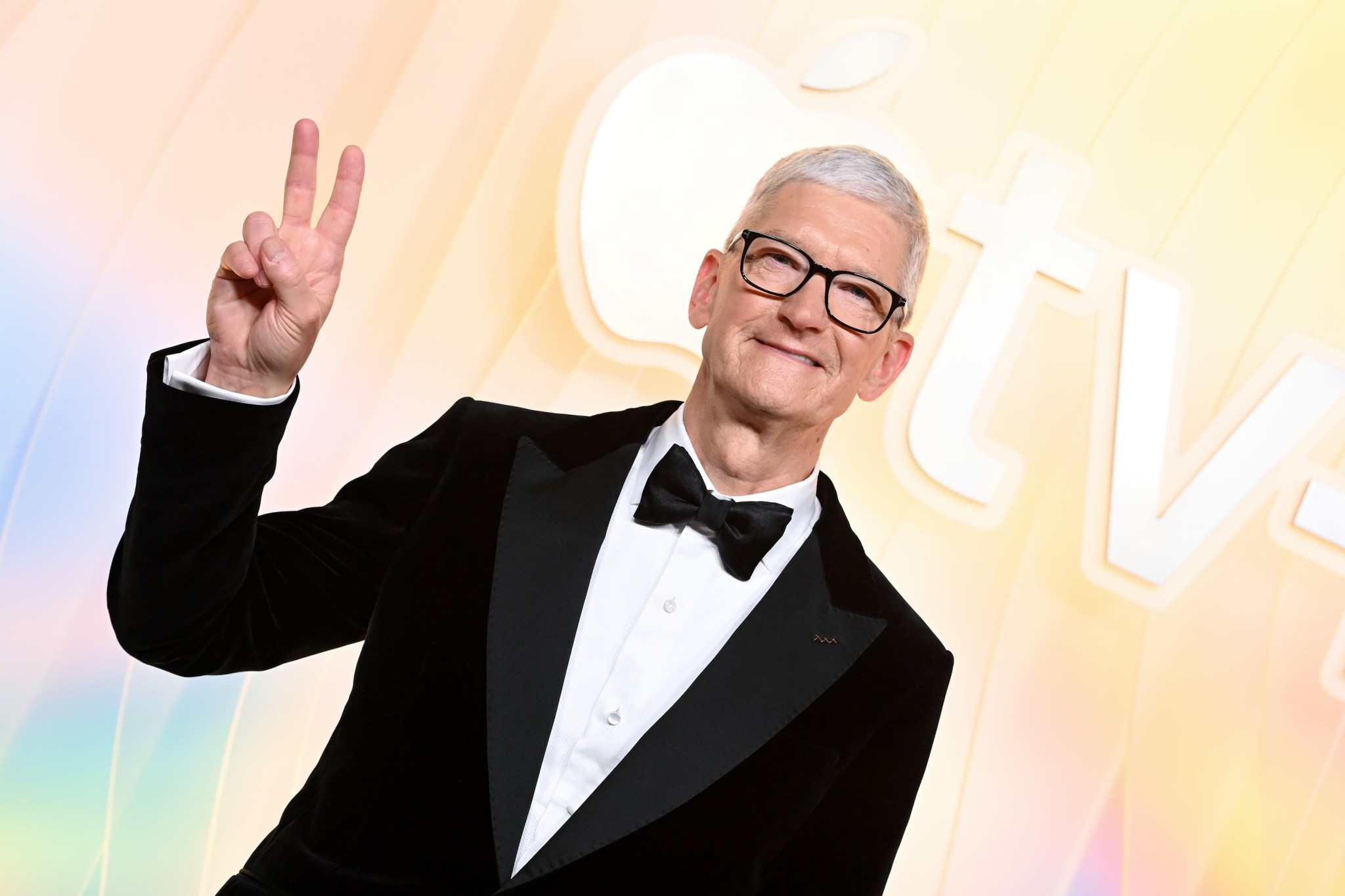
Tim Cook has stepped down as chief executive of Apple, closing a tenure that lasted more than a decade and reshaped the company from a hardware innovator into the world's most valuable services-and-devices ecosystem. The transition places John Ternus, Apple's head of hardware engineering, at the helm of a company navigating tariff uncertainty, shifting consumer demand, and an industry-wide recalibration of expectations around next-generation technologies.
Cook's departure arrives at a moment of broader market turbulence. The financial sector is weighing Fed chair nominee Kevin Warsh's proposed $7 trillion bond market plan, geopolitical risk continues to build around the potential duration of conflict in Iran, and fresh assessments suggest that practical quantum computing may be further from commercial viability than recent hype cycles implied. Against that backdrop, Apple's leadership change carries significance beyond Cupertino.
The Cook legacy: underestimated by design
When Cook succeeded Steve Jobs in 2011, the prevailing narrative questioned whether an operations specialist could sustain a company built on creative vision. That skepticism never fully dissipated, even as Apple's market capitalization grew by multiples under his watch. Cook oversaw the expansion of Apple's services division — including the App Store, Apple Music, iCloud, and Apple TV+ — into a recurring-revenue engine that reduced the company's dependence on iPhone upgrade cycles. He also guided Apple's transition to custom silicon with the M-series chips, a move that redefined performance expectations across the personal computing industry.
Critics pointed to the absence of a breakthrough product category on the scale of the iPhone. The Apple Watch, while commercially successful, never achieved the same cultural centrality. Apple Vision Pro, the company's mixed-reality headset, launched to technical admiration but uncertain mass-market demand. Yet the critique often missed the structural achievement: Cook turned Apple into a company whose earnings resilience and margin profile more closely resemble a luxury conglomerate than a consumer electronics firm. His leadership style — methodical, supply-chain-obsessed, risk-averse on public statements — was easy to underestimate precisely because it lacked theatrics.
New leadership, familiar pressures
John Ternus inherits a company in strong financial position but facing headwinds that demand more than operational discipline. Trade tensions between the United States and China continue to threaten Apple's manufacturing base, which remains heavily concentrated in East Asia. Regulatory scrutiny over App Store economics has intensified in both the European Union and the United States, with antitrust frameworks evolving in ways that could constrain Apple's services margins.
The quantum computing dimension adds a subtler strategic question. As new assessments push timelines for practical quantum applications further out, the encryption and security architecture underpinning Apple's privacy-first positioning appears safe for now. But the long arc of that technology will eventually force hardware and software decisions that Ternus's team will need to anticipate years in advance.
Meanwhile, the macroeconomic environment offers little comfort. A $7 trillion bond market restructuring, if pursued under Warsh's leadership at the Federal Reserve, would reshape borrowing costs and capital allocation across the technology sector. Apple's substantial cash reserves provide a buffer, but the company is not immune to shifts in consumer spending driven by interest rate policy.
Ternus's background in hardware engineering signals that Apple may lean further into product development as its competitive differentiator — a return, perhaps, to the primacy of the object in hand. Whether that orientation proves sufficient in an era increasingly defined by artificial intelligence platforms, cloud infrastructure, and regulatory negotiation remains an open question. Cook built a fortress of margins and ecosystem lock-in. The test for his successor is whether that fortress holds when the landscape around it shifts — or whether the next chapter of Apple requires something its culture has historically resisted: reinvention under pressure.
With reporting from Fortune.
Source · Fortune