The modern workspace is often a battleground of tangled cables and competing power bricks. As personal device ecosystems expand — a phone, a smartwatch, wireless earbuds, perhaps a second phone — the physical infrastructure required to sustain them colonizes every available surface. Nightstands, desks, and kitchen counters become staging grounds for a mess of adapters and cords that no amount of cable management can fully tame. Twelve South, a brand known for its Apple-centric design sensibilities, has long attempted to solve this aesthetic friction through hardware that prioritizes a reductionist form factor. Its latest product to reach a broader audience through a price drop is the PowerBug, a magnetic charger that plugs directly into a wall outlet and is currently available for $35.05 at Amazon — a $15 discount from its standard retail price.
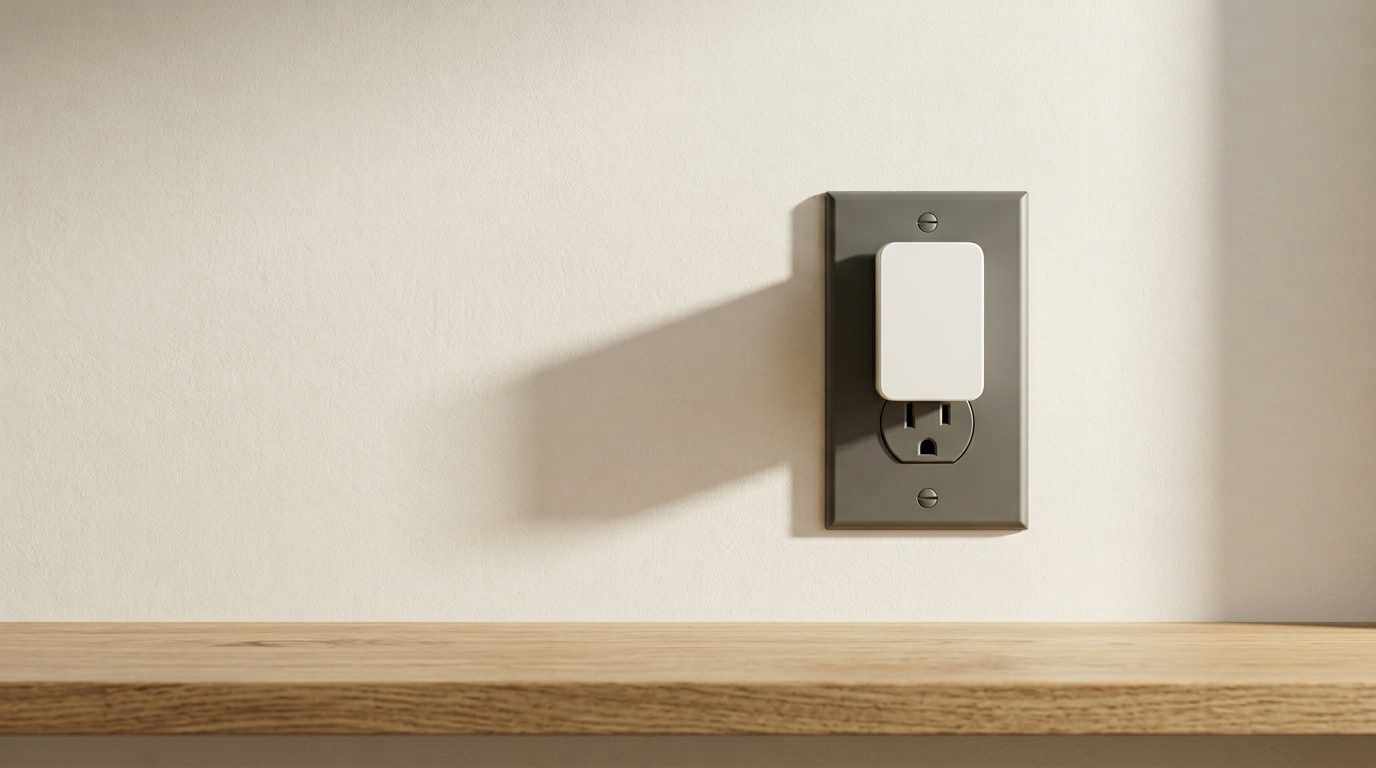
The PowerBug's design thesis is simple: eliminate the cable entirely. Rather than sitting on a surface tethered to a power brick, the device occupies a wall outlet and presents a magnetic charging surface flush against the wall itself. Devices snap into place through magnetic alignment, removing the minor but persistent friction of plugging in a Lightning or USB-C connector in the dark. It is designed to handle multiple devices simultaneously, functioning as a compact hub rather than a single-purpose puck.
The Quiet Market for Workspace Minimalism
The PowerBug sits within a product category that has grown steadily but without much fanfare: accessories designed not to add capability, but to subtract visual and physical clutter. This is a market shaped less by spec sheets than by the logic of interior design and daily routine. Twelve South has built a business around this niche, producing monitor stands, laptop risers, and charging accessories that treat Apple's industrial design language as a constraint to be respected rather than ignored.
The approach has precedent beyond Twelve South. The broader accessories market has seen a slow migration toward wall-mounted and surface-clearing solutions as wireless charging standards — particularly Apple's MagSafe and the Qi2 specification — have matured enough to make cable-free power delivery reliable for everyday use. MagSafe's introduction in 2020 created a platform layer that accessory makers could build against with some confidence, knowing that magnetic alignment would remain a fixture of Apple's hardware roadmap for the foreseeable future. The PowerBug is a downstream product of that platform decision.
What distinguishes devices like the PowerBug from generic wireless chargers is the emphasis on where charging happens, not just how. A wall-mounted charger reframes the act of powering a device as something closer to hanging a coat on a hook — a gesture that returns a surface to its owner rather than claiming more of it.
Constraints and Trade-offs
The minimalist approach carries inherent trade-offs. A charger fixed to a wall outlet is, by definition, immobile. It cannot travel in a bag or be repositioned to wherever a user happens to sit. It also occupies an outlet that might otherwise serve another purpose, a consideration that varies in severity depending on the age and layout of a home's electrical infrastructure. For renters or those with limited outlet access, the value proposition shifts.
There is also the question of charging speed. Magnetic wireless charging, while convenient, typically delivers power more slowly than a direct wired connection. For users who treat charging as an overnight or passive activity — placing a phone on the wall before bed, for instance — this is a negligible concern. For those who need rapid top-ups during a busy day, the calculus is different.
The $35 price point lowers the barrier to experimentation. At roughly the cost of a branded cable and wall adapter purchased separately, the PowerBug asks relatively little financial commitment from a buyer testing whether a wall-mounted charging workflow fits their habits. Whether the product category it represents remains a niche preference or becomes a default expectation depends, in large part, on how aggressively wireless charging standards continue to close the speed gap with wired alternatives — and whether the next generation of devices makes cables feel not just unnecessary, but archaic.
With reporting from The Verge.
Source · The Verge