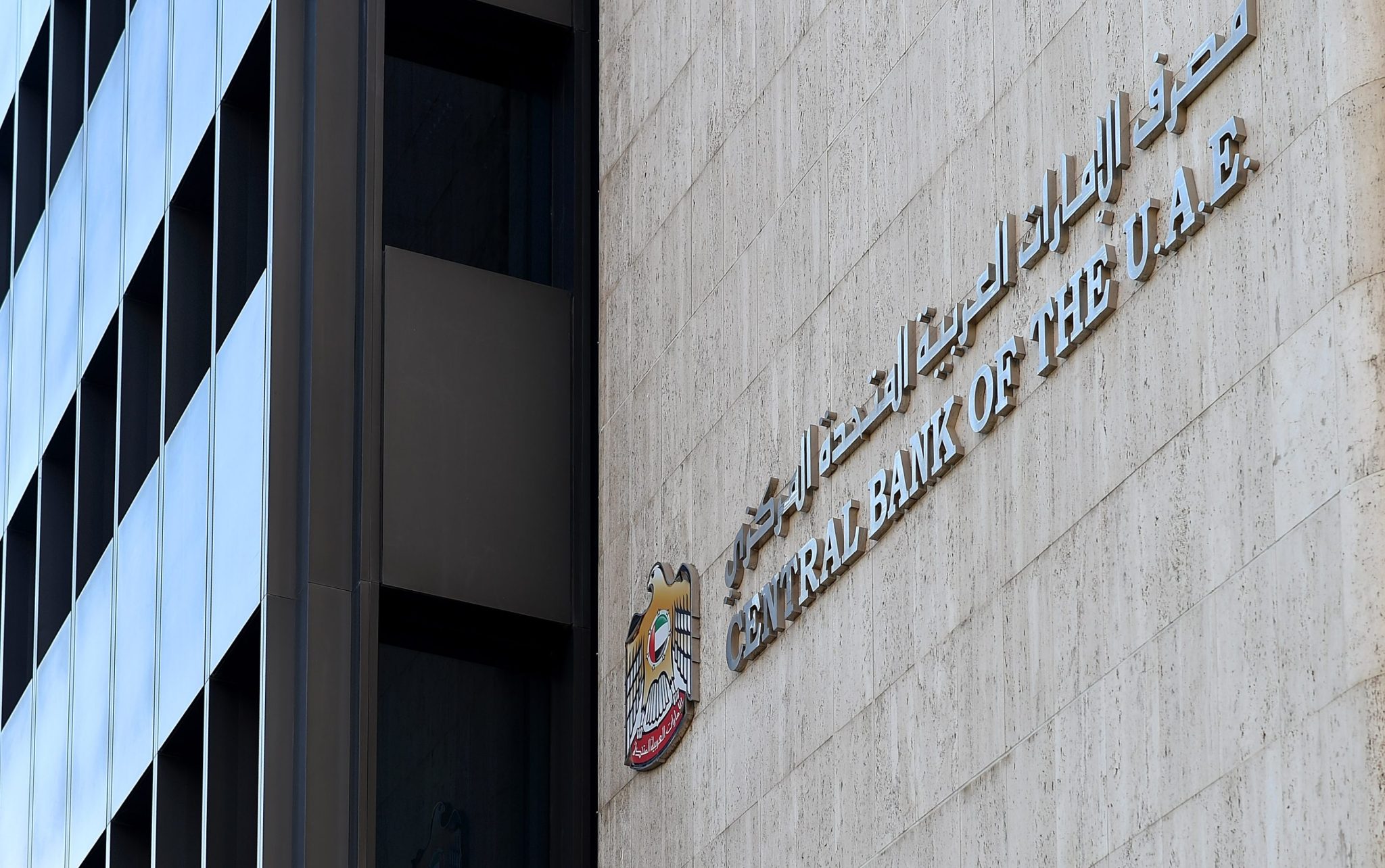
United Arab Emirates officials have opened informal channels with the U.S. Treasury and the Federal Reserve to explore a currency swap line — a financial mechanism that would give Abu Dhabi direct access to dollar liquidity without selling assets on the open market. Central Bank Governor Khaled Mohamed Balama reportedly raised the possibility during meetings in Washington last week. No formal request has been submitted, but the conversations signal that Emirati policymakers view the economic fallout from the ongoing regional conflict as severe enough to warrant an extraordinary backstop.
The war has already disrupted oil shipments and damaged energy infrastructure across the Gulf, cutting into the dollar revenues that underpin the UAE's currency peg. The dirham has been fixed at roughly 3.6725 to the dollar since 1997, a peg that requires substantial foreign-exchange reserves to defend. Capital outflows, a natural byproduct of regional instability, compound the pressure. A swap line with the Fed would function as a safety valve: the UAE central bank could temporarily exchange dirhams for dollars at an agreed rate, shoring up liquidity without the market signaling that accompanies reserve drawdowns.
What a swap line would — and would not — solve
Currency swap lines are not bailouts. They are pre-arranged credit facilities between central banks, designed to prevent short-term liquidity crunches from metastasizing into solvency crises. The Federal Reserve extended such lines to major central banks during the 2008 financial crisis and again during the early months of the COVID-19 pandemic, in both cases to keep dollar-funding markets from seizing up. The recipients were almost exclusively advanced economies with deep trade ties to the United States — the European Central Bank, the Bank of Japan, the Bank of England, and a handful of others.
Extending a swap line to the UAE would mark a departure from that pattern. The Fed has historically been reluctant to open standing facilities with Gulf states, in part because doing so could be read as an implicit guarantee of a currency peg — a monetary-policy commitment the Fed has no mandate to make. The Treasury, which holds broader authority over dollar diplomacy, would likely need to signal political support before the Fed moved. That makes the arrangement as much a geopolitical question as a financial one.
For the UAE, the calculus is straightforward. Defending the peg through reserve sales is expensive and finite. A swap line offers a credible signal to markets that dollar liquidity is available, which can itself reduce the speculative pressure that forces reserves lower. The mere existence of such a facility, even if never drawn upon, tends to calm foreign-exchange markets.
The geopolitical price of dollar access
Washington's willingness to entertain the request will depend on factors well beyond monetary plumbing. The UAE's positioning in the regional conflict, its alignment with U.S. strategic objectives, and the broader trajectory of Gulf-Washington relations all feed into the decision. Currency swap lines have long functioned as instruments of alliance management: access to the Fed's balance sheet is a privilege that carries implicit expectations of policy coordination.
The timing is also notable. Energy markets remain volatile, and any perception that a major Gulf producer faces fiscal strain could amplify price swings. A swap line announcement — or even credible reporting of advanced negotiations — would serve a dual purpose: stabilizing the dirham and reassuring oil markets that the UAE's export capacity is backstopped by American financial infrastructure.
Yet the arrangement carries risks for both sides. For the Fed, extending a line to a pegged-currency economy in an active conflict zone sets a precedent that other nations — from Saudi Arabia to commodity exporters in Africa and Latin America — could invoke. For the UAE, accepting a U.S. financial lifeline deepens dependence on Washington at a moment when strategic autonomy has been a stated goal of Emirati foreign policy for more than a decade.
The tension, then, is structural: the UAE needs dollar liquidity that only the United States can provide at scale, while the United States holds leverage it may choose to price in diplomatic rather than financial terms. Whether that exchange produces a formal facility or remains a quiet understanding between central bankers will say as much about the state of the alliance as it does about the state of the dirham.
With reporting from Fortune.
Source · Fortune