The intersection of outdoor performance wear and social activism has found a new focal point in the "Goodness Grows" collection, a collaboration between The North Face and Sky High Farm Goods. While typical fashion partnerships prioritize aesthetic novelty, this six-piece capsule attempts to bridge the gap between technical utility and land stewardship. By reimagining heritage silhouettes for the rigors of agricultural work, the project highlights the Hudson Valley-based nonprofit's mission to address food equity through regenerative farming.
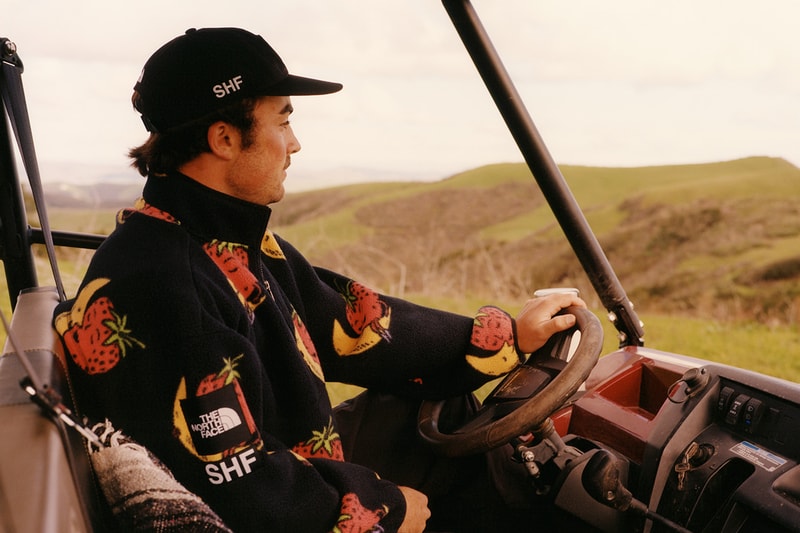
The collection is anchored by two of The North Face's most recognizable icons: the Mountain Jacket and the Fleece Half-Zip. These pieces have been subtly re-engineered to serve as functional layers for wet-weather farming and rural exploration. The broader range, which includes a Mountain Pant and a heavy-duty Tote Bag, adopts a visual language rooted in Sky High Farm's "strawberry moon" motif — a symbol of the brand's commitment to nourishing communities and restoring soil health.
Workwear as Statement, Function as Credential
Sky High Farm began as an agricultural operation in the Hudson Valley before expanding into a nonprofit and, eventually, a fashion-adjacent brand under the creative direction of Denim Tears founder Tremaine Emory. The organization channels proceeds from its commercial ventures — including collaborations with fashion labels — back into programs that distribute fresh produce to food-insecure communities in the New York region. The model is unusual in the streetwear and outdoor apparel landscape, where cause-marketing partnerships more commonly involve one-time donations or limited awareness campaigns rather than sustained operational funding.
The North Face, for its part, has long occupied a dual identity. The brand is both a technical outfitter for alpine expeditions and a streetwear staple whose puffer jackets and fleece pullovers circulate far from any trailhead. That tension — between performance credibility and lifestyle cachet — has defined its collaboration strategy for years, with past partnerships spanning Supreme, KAWS, and Undercover. The "Goodness Grows" capsule represents a different register. Rather than leveraging hype-driven scarcity or graphic provocation, the collection leans into the proposition that outdoor gear can serve agricultural labor as naturally as it serves summit attempts.
This is not an entirely new idea. The broader fashion industry has spent the better part of a decade rediscovering workwear and utility garments as design categories. Brands from Carhartt WIP to Lemaire have drawn on agricultural and industrial silhouettes. What distinguishes the Sky High Farm partnership is the claim of direct material consequence: the garments are not merely inspired by farm work but are positioned as funding mechanisms for it.
The Limits of Purpose-Driven Product
The collection arrives at a moment when consumer skepticism toward corporate social responsibility initiatives remains high. A growing body of criticism has questioned whether purpose-driven capsule collections generate meaningful impact or primarily serve as brand-building exercises that convert social causes into marketing narratives. The distinction often hinges on transparency — whether the financial flows between a commercial product and its stated beneficiary are clearly documented and proportionate to the messaging.
The North Face has committed to ongoing financial support for Sky High Farm, a framing that suggests something beyond a single-season licensing deal. Yet the specifics of that commitment — its scale, duration, and structure — remain largely undefined in public-facing materials. For a project that positions itself as a "grounded alternative" to performative partnerships, the absence of granular detail is notable.
The regenerative farming movement itself provides a useful lens. Regenerative agriculture — a set of practices aimed at restoring soil biodiversity, sequestering carbon, and reducing reliance on synthetic inputs — has gained traction among both environmental advocates and food-system reformers. Organizations operating at the intersection of food equity and land stewardship, as Sky High Farm does, face the challenge of sustaining labor-intensive operations that rarely generate commercial returns on their own. External funding, whether from philanthropy, government programs, or fashion collaborations, becomes essential infrastructure rather than a bonus.
The question that lingers over "Goodness Grows" is whether the collaboration model can scale beyond symbolism. A six-piece capsule collection, however thoughtfully designed, operates within the familiar grammar of limited-edition drops. The deeper test is whether partnerships of this kind can establish durable funding channels for food equity work — or whether they remain, in the end, seasonal gestures dressed in technical fabric.
With reporting from Hypebeast.
Source · Hypebeast