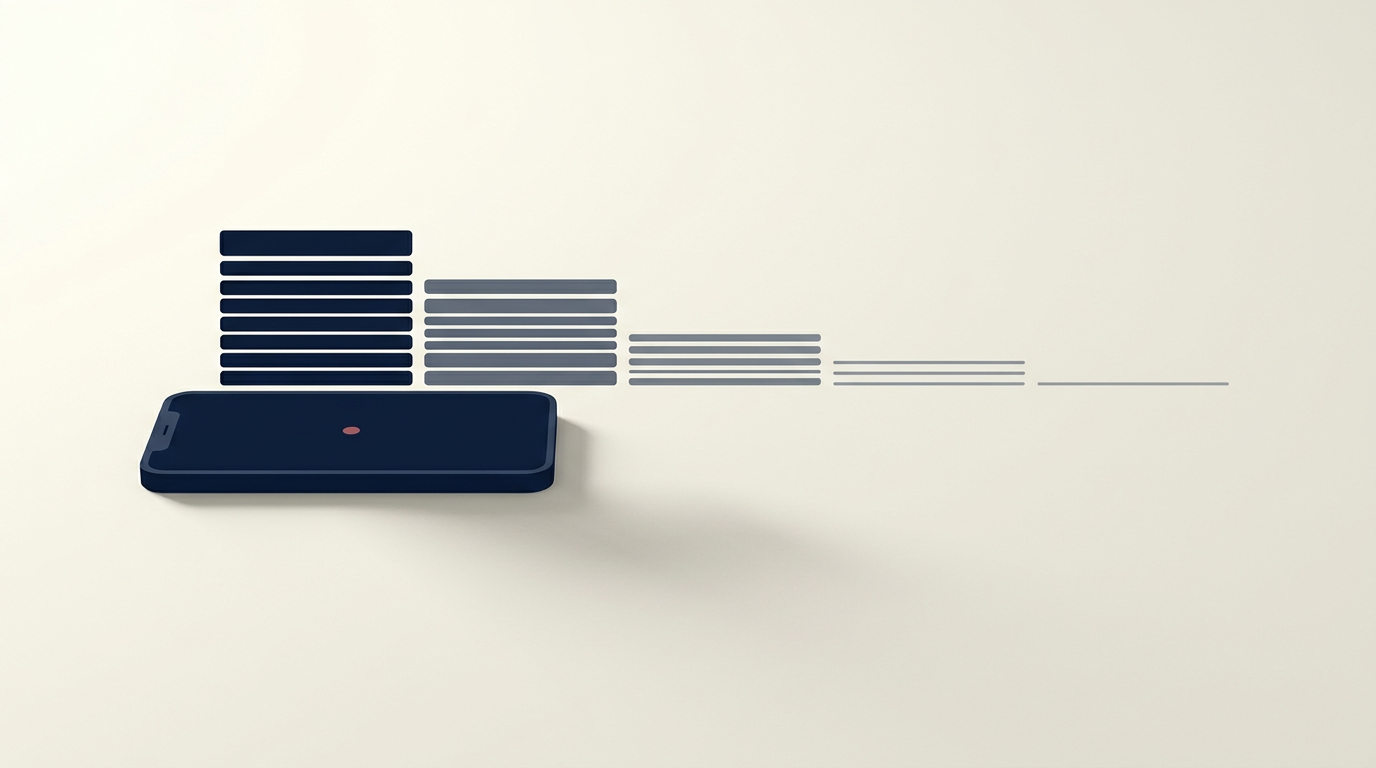
The push notification, once a reliable bridge between platform and user, has become one of the most contested pieces of real estate in consumer technology. YouTube is now recalibrating how it uses that bridge. The platform has begun automatically muting push notifications from subscribed channels when a user has not engaged with their content for at least 30 days. The change, which follows a trial period earlier in 2026, is designed to prevent the cascade effect that notification fatigue produces: users overwhelmed by irrelevant alerts disabling notifications entirely, severing the connection not just with channels they ignore but with the ones they genuinely care about.
The feature targets a specific behavioral pattern. Many YouTube users subscribe to channels in a moment of interest and toggle notifications to "all," only to lose interest weeks or months later. The subscriptions remain, the alerts keep arriving, and the lock screen fills with content the user will never tap. YouTube's response is to treat engagement — or the absence of it — as a signal of intent, pruning the notification stream before the user reaches for the blunt instrument of a system-level mute.
The economics of the lock screen
Notification management has quietly become a strategic priority across every major platform. The lock screen is finite territory, and every alert that fails to earn a tap degrades the perceived value of the ones that follow. Apple and Google have both introduced increasingly sophisticated notification controls at the operating system level — summary modes, focus filters, priority rankings — precisely because the volume of alerts from apps has grown faster than user tolerance.
For YouTube, the stakes are particular. The platform's recommendation engine is its primary distribution mechanism, surfacing content through the home feed and autoplay. Push notifications serve a different function: they are the one channel that reaches users who are not already inside the app. Losing that channel means losing the ability to pull a user back into a session they were not planning to start. The 30-day muting threshold is, in effect, an attempt to preserve the credibility of the notification channel itself by ensuring that what arrives on the lock screen has a reasonable chance of being wanted.
The inclusion of an exception for infrequent uploaders is a telling design choice. Channels that post rarely — monthly or less — would be penalized under a strict engagement-decay rule, since their subscribers have fewer opportunities to interact. By carving out this exception, YouTube signals that the policy is calibrated against drift, not against low-volume creators. The distinction matters for a platform that hosts everything from daily vloggers to documentary channels that publish a handful of times per year.
Relevance as infrastructure
The broader pattern here extends beyond notifications. Platforms across the attention economy are shifting from maximizing reach to maximizing relevance, not out of altruism but out of structural necessity. A notification that goes ignored is not neutral — it trains the user to ignore the next one. Over time, the entire notification surface loses its power, and the platform loses a re-engagement tool it cannot easily replace.
YouTube's approach also raises questions about the relationship between creators and their audiences. Subscribers have long been treated as a durable asset — a number on the channel page, a built-in audience for every upload. Automatic muting introduces a decay function into that relationship. A subscriber who stops watching is no longer a guaranteed recipient of alerts, which shifts the burden onto creators to maintain active engagement or risk a quiet erosion of their notification reach. The muted alerts will still appear in the app's internal inbox, but the difference between a lock-screen push and a buried in-app message is the difference between a tap and a scroll that may never happen.
What YouTube is building is, in essence, an attention-quality filter — one that sits between the creator's upload button and the subscriber's lock screen, making a judgment call about whether the relationship is still alive. Whether that filter ultimately serves users, creators, or the platform's own engagement metrics most is a question the data will answer differently depending on who is reading it.
With reporting from Engadget.
Source · Engadget