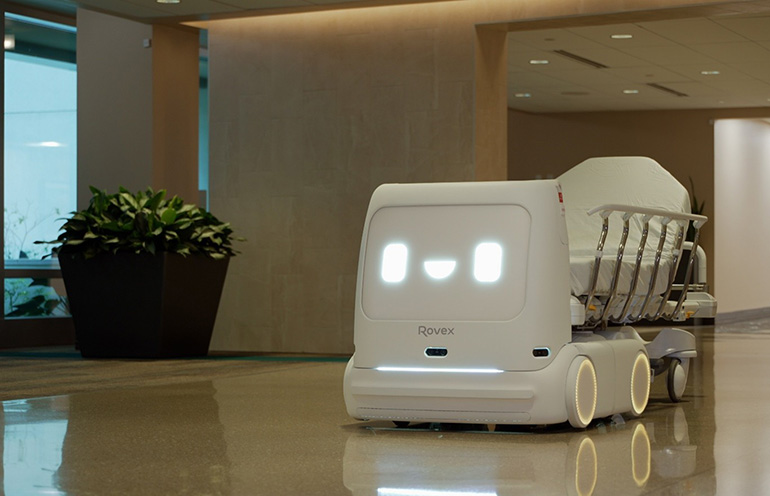
The modern hospital is as much a logistical puzzle as it is a medical one. Every delayed patient transfer — a trip from a recovery room to an imaging suite or a surgical theater — creates a cascading series of inefficiencies that strain both schedules and staff. To address these systemic frictions, BayCare Health System has partnered with robotics firm Rovex to pilot an autonomous transport system at Morton Plant Hospital in Clearwater, Florida.
The pilot, which launched this month, seeks to integrate Rovex's robotic platforms into the daily workflows of one of West Central Florida's largest healthcare providers. For BayCare, the initiative is an exercise in operational resilience. By automating the movement of patients, the system aims to mitigate the "ripple effect" where a single delay in the hallway can stall high-value clinical assets like MRI machines and operating rooms.
The Hidden Cost of Hospital Corridors
Patient transport is among the least visible yet most consequential bottlenecks in hospital operations. The task is deceptively simple — moving a person from point A to point B — but at scale it consumes significant labor hours, requires coordination across departments, and introduces variability that ripples through tightly scheduled clinical workflows. When a transport aide is unavailable or delayed, the downstream effects can include idle surgical teams, postponed imaging appointments, and extended patient wait times that erode both outcomes and satisfaction.
The physical toll compounds the operational one. Patient transport is a leading cause of musculoskeletal injury among healthcare workers, driven by the repetitive strain of pushing beds and wheelchairs through corridors that were rarely designed with ergonomic efficiency in mind. These injuries feed directly into the industry's chronic staffing challenges. Hospitals across the United States have struggled with workforce shortages since well before the pandemic, and the attrition caused by physical burnout in support roles only deepens the problem. Automating transport does not eliminate the need for human caregivers, but it could redirect their labor toward tasks that require clinical judgment rather than physical exertion.
The BayCare-Rovex pilot sits within a broader wave of robotic adoption in healthcare logistics. Hospitals have already deployed autonomous systems for pharmacy delivery, linen distribution, and laboratory specimen transport. Companies such as Aethon, whose TUG robots have operated in hundreds of hospitals, demonstrated years ago that autonomous navigation through complex indoor environments is technically feasible. What distinguishes patient transport is the added layer of complexity: the cargo is a human being, which raises the bar for safety, comfort, and regulatory scrutiny.
From Pilot to System-Wide Calculus
BayCare operates a network of 16 hospitals across West Central Florida, which makes the Morton Plant pilot more than an isolated experiment. If the Rovex system demonstrates measurable gains in throughput and injury reduction at a single facility, the logic for broader deployment becomes difficult to ignore. Health systems of BayCare's scale are perpetually searching for interventions that can be standardized across sites, and robotic transport — if the technology proves reliable in the unpredictable environment of a working hospital — fits that template.
Yet the path from pilot to fleet is rarely straightforward. Hospital corridors are shared spaces, crowded with staff, visitors, equipment carts, and patients in varying states of mobility and distress. Autonomous systems must navigate not only physical obstacles but also the social dynamics of a care environment where a robot's presence could reassure some patients and unsettle others. Integration with existing IT infrastructure — scheduling systems, electronic health records, elevator controls — adds another layer of technical negotiation.
There is also the question of economics. Robotic transport systems require capital investment, ongoing maintenance, and workflow redesign. Whether the return materializes as reduced injury claims, faster asset utilization, or improved staff retention depends on variables that differ from hospital to hospital. The Morton Plant pilot will generate data, but the harder calculation is whether that data translates into a compelling case across facilities with different layouts, patient populations, and staffing models.
The tension at the center of this initiative is familiar across healthcare automation: the technology is advancing faster than the institutional frameworks designed to absorb it. BayCare's corridor experiment will reveal less about what robots can do and more about what hospitals are prepared to change.
With reporting from The Robot Report.
Source · The Robot Report