For decades, the bathroom scale was a blunt instrument — a simple measure of gravity's pull on mass. Its output was a single number, stripped of context, often more anxiety-inducing than informative. But as the "quantified self" movement migrates from the periphery to the mainstream, the hardware sitting on bathroom floors is evolving in kind. Bioimpedance scales, once confined to clinical settings and sports medicine labs, have become consumer staples, shifting the conversation from total weight to a more granular understanding of body composition.
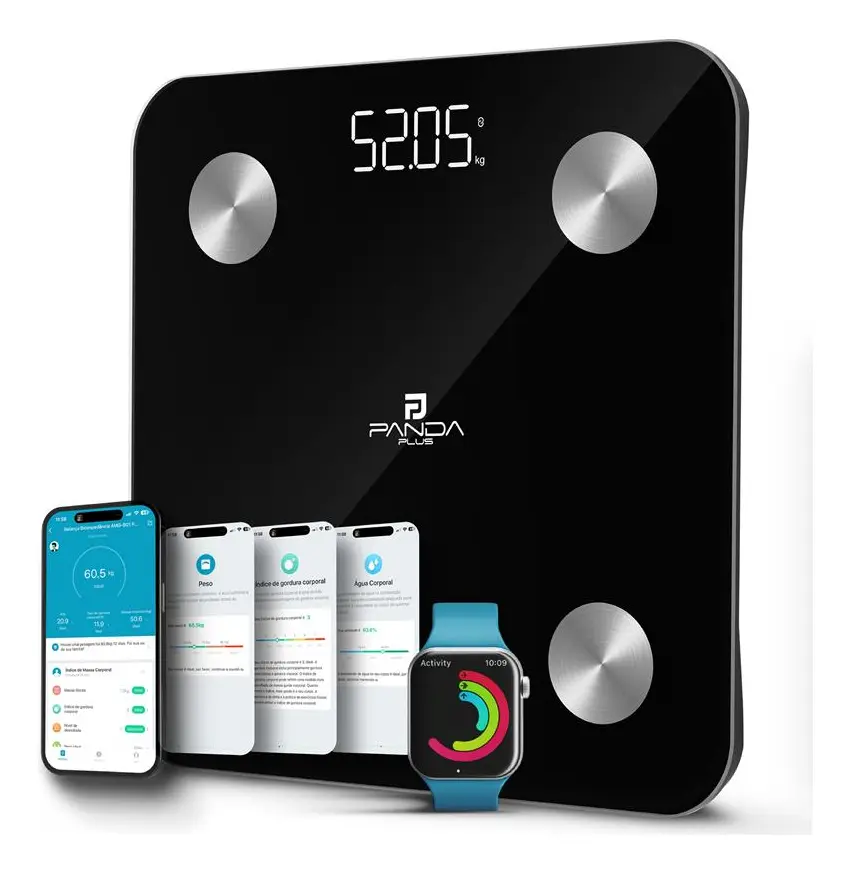
The latest generation of these devices, such as the Pandaplus models integrated with the Tuya Smartlife ecosystem, utilizes small electrical impulses to map the body's internal landscape. By sending a low-level current through the feet and measuring resistance across different tissue types — fat conducts electricity differently than muscle or bone — these scales generate up to 13 distinct metrics, including muscle mass, visceral fat, and hydration levels. The underlying technology, bioelectrical impedance analysis (BIA), has been used in clinical nutrition and exercise physiology for years. What has changed is not the science but the packaging: miniaturized sensors, cheaper chipsets, and smartphone connectivity have collapsed the distance between a hospital body composition lab and a $30 bathroom accessory.
From Single Number to Metabolic Dashboard
This transition represents a broader pattern in consumer health technology: the move away from single-point data toward a multi-dimensional view of metabolic health. A weight reading in isolation tells a person almost nothing about whether they are gaining muscle, losing fat, retaining water, or some combination of all three. Bioimpedance scales attempt to disaggregate that number into its constituent parts, offering a richer — if still imperfect — picture.
The clinical accuracy of consumer-grade BIA devices remains a subject of debate among researchers. Professional-grade analyzers, which typically use multiple frequencies and electrode placements on both hands and feet, deliver higher precision than the foot-to-foot path used by most home scales. Yet for trend tracking over weeks and months — which is arguably the more useful application for most individuals — even lower-fidelity devices can reveal meaningful patterns. The value lies less in the absolute accuracy of any single reading than in the directional consistency of data collected under similar conditions over time.
Connectivity is the linchpin of this shift. By syncing via Bluetooth with platforms like Apple Health and Fitbit, these devices allow users to contextualize their physical changes through historical graphing and cross-referencing with other data streams — sleep, activity, nutrition. The scale ceases to be a standalone object and becomes one node in a personal health network. This integration is what separates the current generation of smart scales from earlier digital models that merely displayed a number on a screen.
The Disappearing Cost Barrier
As the cost of BIA sensor modules and Bluetooth chips continues to decline, the barrier to high-fidelity personal health monitoring is effectively disappearing. Devices that once commanded premium prices are now available at price points accessible to a broad consumer base. The competitive dynamics of the category — with dozens of manufacturers producing functionally similar hardware differentiated mainly by app quality and ecosystem compatibility — have accelerated this commoditization.
The more consequential question may not be about hardware at all. As millions of consumers accumulate longitudinal body composition data, the downstream implications for health platforms, insurers, and preventive medicine become harder to ignore. The data generated by a bathroom scale, aggregated across populations and correlated with outcomes, holds potential value that extends well beyond any individual's morning weigh-in. Whether that potential materializes as genuine health improvement or merely as another stream of personal data flowing into commercial ecosystems is a tension that remains unresolved — and one worth watching as the category matures.
With reporting from Olhar Digital.
Source · Olhar Digital