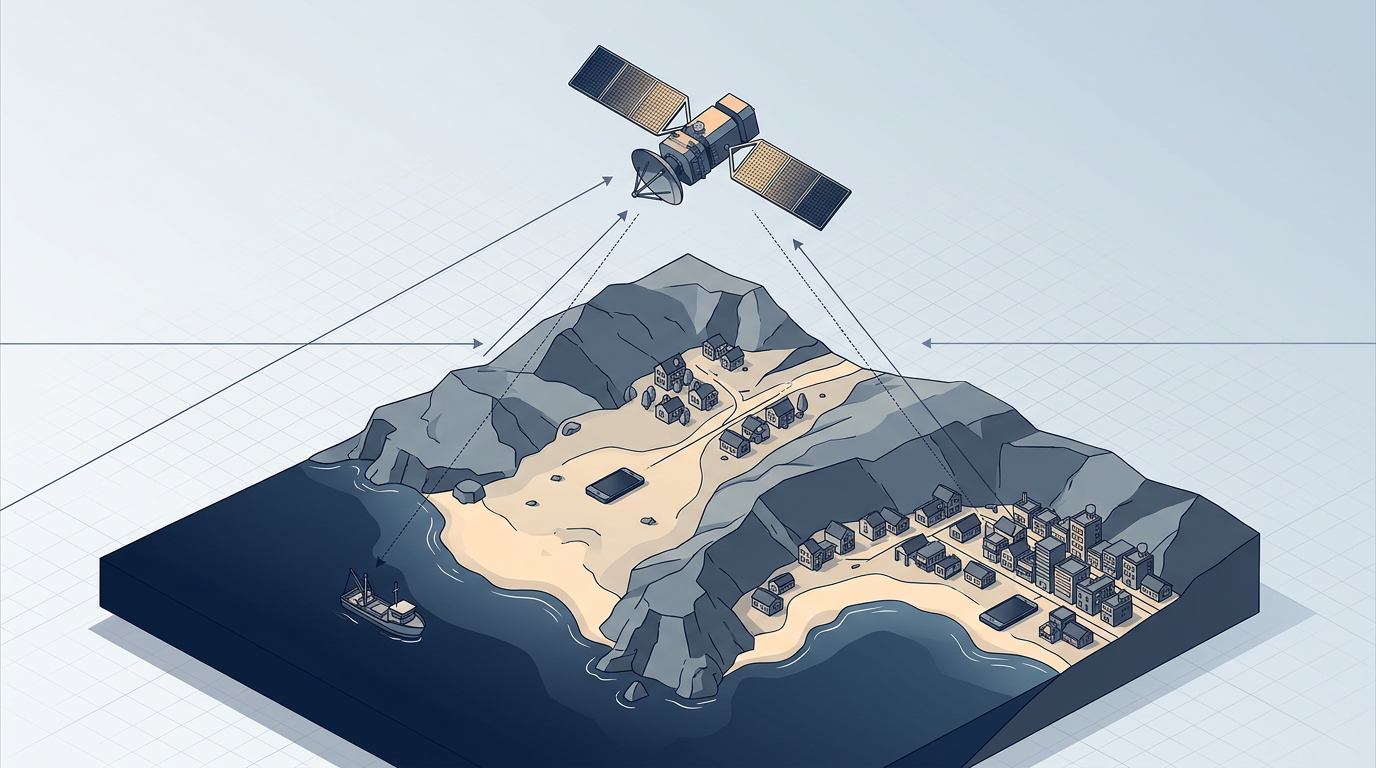
SpaceX is repositioning its Starlink constellation from a rural broadband solution into something far more ambitious: a global network of orbiting cell towers. The company's "Direct to Cell" initiative aims to eliminate terrestrial dead zones by connecting standard smartphones — including widely used models from Apple, Samsung, and Motorola — directly to low-Earth orbit satellites. Unlike traditional satellite internet, the service requires no specialized hardware or ground terminals. In principle, it turns the sky into a seamless extension of the mobile network, reaching hikers in remote valleys and fishing boats beyond coastal coverage alike.
The promise is significant. Roughly a third of the Earth's land surface lacks reliable mobile coverage, and maritime and aviation corridors remain largely dependent on expensive, purpose-built satellite phones. A system that works with off-the-shelf handsets could reshape expectations about where connectivity is a given. Yet the gap between orbital ambition and terrestrial reality is measured in more than kilometers.
The physics problem no software update can fix
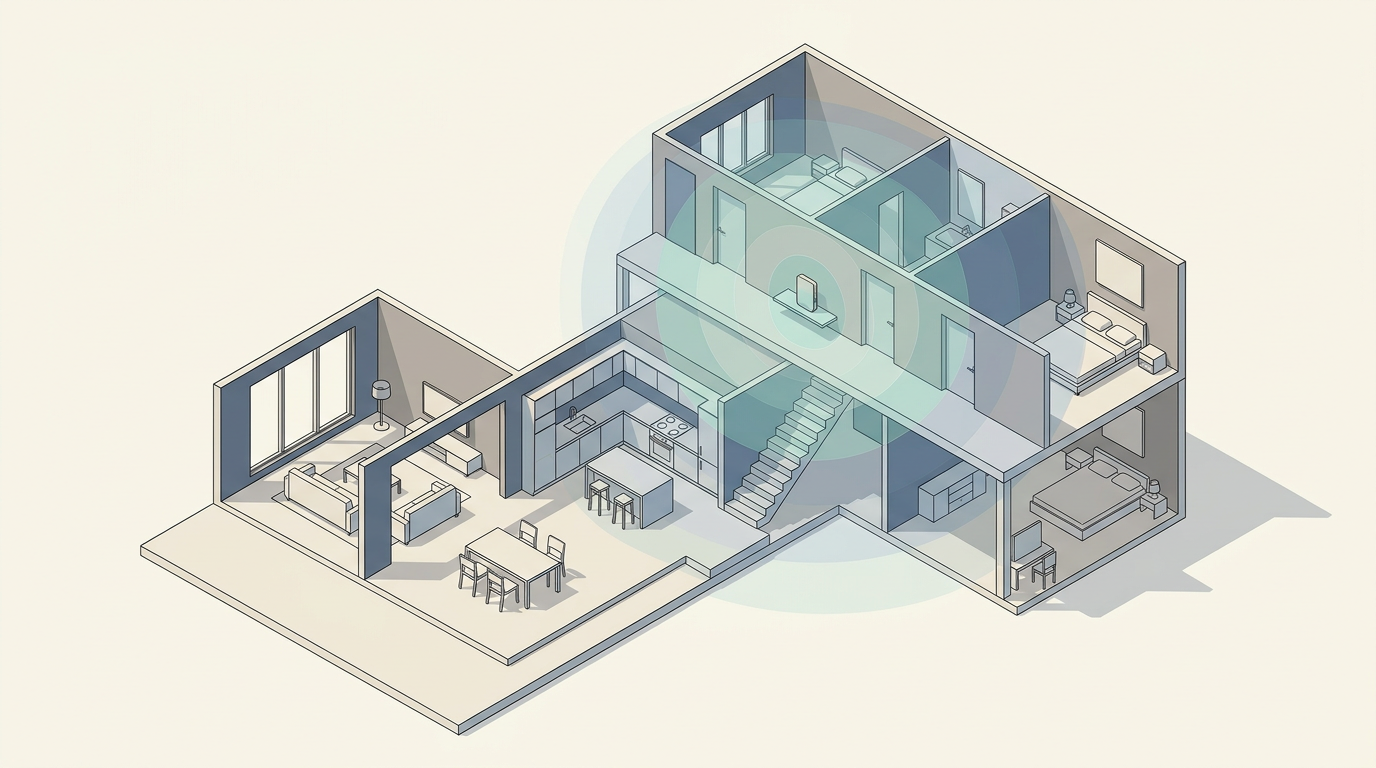
The core challenge is one of signal propagation. Conventional cell towers sit a few dozen meters above ground and broadcast at relatively high power over short distances. Starlink's satellites orbit at roughly 550 kilometers, and the signal reaching a smartphone antenna must travel a path orders of magnitude longer — through atmosphere, weather, and, critically, whatever stands between the user and the open sky. Concrete, steel-reinforced walls, low-emissivity glass, and even dense foliage attenuate satellite signals to the point of unusability in many indoor environments.
This is not a novel limitation. GPS, which also relies on satellite line-of-sight, degrades sharply inside buildings — a constraint engineers have spent decades working around with assisted positioning and inertial sensors. Direct-to-cell connectivity faces an analogous barrier, but with higher stakes: users expect phone calls and text messages to work everywhere, not just outdoors. The result is a technology that functions reliably in open terrain — exactly the places where dead zones are most dangerous — but offers diminishing returns the moment a user steps under a roof. For urban and suburban environments, where the vast majority of mobile usage occurs, the service is better understood as an emergency fallback than a primary connection.
SpaceX has acknowledged that early capabilities focus on text messaging, with voice and data arriving in later phases. The progression mirrors the technical reality: low-bandwidth messaging tolerates weaker signals and higher latency far better than voice or streaming video. Each step up the bandwidth ladder demands either more powerful satellites, more sensitive phone antennas, or both — engineering tradeoffs that carry weight, cost, and regulatory implications.
Regulatory caution in Brazil and the partnership model
Brazil offers an instructive case study in how regulators are approaching the technology. Anatel, the national telecommunications agency, has authorized restricted experimental testing, permitting brief seven-minute windows of satellite connectivity. The constraint reflects a prudent approach: direct-to-cell services share spectrum with terrestrial mobile networks, and interference management between orbital and ground-based transmitters remains an open engineering and regulatory question.
The commercial model taking shape in Brazil — and likely elsewhere — favors integration over disruption. Rather than operating as a standalone carrier, Starlink is expected to partner with incumbent mobile operators, bundling satellite access into existing plans. This mirrors the approach T-Mobile has pursued in the United States, where the carrier announced a partnership with SpaceX to offer satellite connectivity as a supplementary layer. For regulators, the partnership model reduces spectrum conflict concerns. For operators, it offers a way to market universal coverage without building towers in economically unviable locations. For SpaceX, it provides a distribution channel and regulatory cover in markets where foreign satellite operators face scrutiny.
The broader question is where direct-to-cell settles in the connectivity hierarchy. The technology is unlikely to challenge terrestrial 5G in dense urban cores, where capacity demands dwarf what orbital infrastructure can deliver. But in the vast stretches of land and sea where building a tower makes no economic sense, it fills a gap that has persisted since the dawn of mobile telephony. The tension lies between marketing narratives — which tend toward the universal — and engineering constraints, which remain stubbornly specific. Whether consumers understand the service as a life-saving tool for the backcountry or expect it to work in their basement will shape both adoption and satisfaction in the years ahead.
With reporting from Canaltech.
Source · Canaltech